

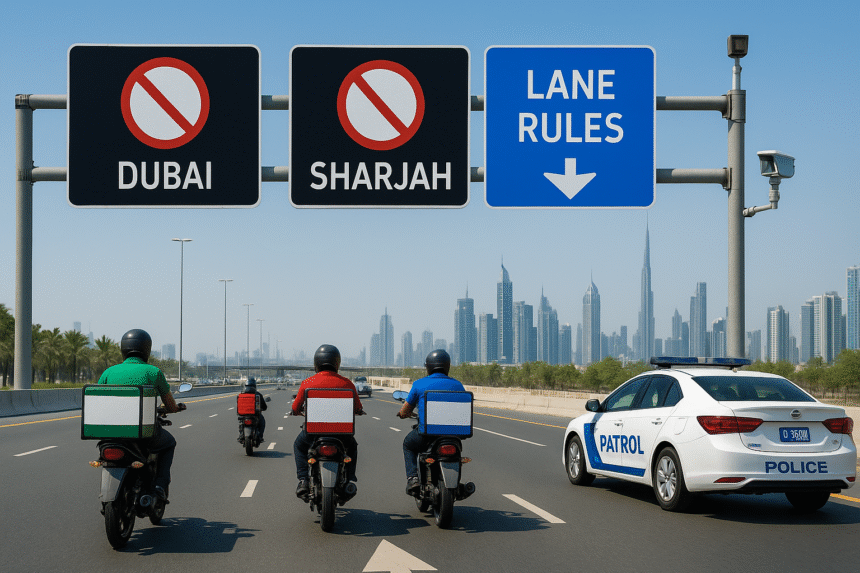
New lane bans, fines up to Dh1,500, and permit suspensions aim to curb road accidents as authorities in Dubai and Sharjah introduce tighter regulations for delivery riders. With delivery services increasing rapidly due to food apps and e-commerce platforms, the number of motorcycles on busy highways has grown, prompting safety concerns.
Delivery riders often face pressure to meet fast delivery times, which pushes many to ride in high-speed lanes, make sudden lane shifts, or overtake dangerously. The new rules are designed to prevent such behavior and reduce collision risks on major roads.
Updated Rules in Dubai
Dubai’s Roads and Transport Authority (RTA) has applied new lane restrictions specifically for commercial delivery motorcycles. Riders are no longer allowed to use the fastest lanes on highways. On roads with five or more lanes, the left-most two lanes are restricted. On roads with three or four lanes, the fastest lane is off-limits. These lanes are typically used by vehicles traveling at higher speeds, and delivery motorcycles are more vulnerable in those spaces.
To make compliance easier, Dubai has installed new road signs that clearly mark restricted areas. Enforcement will be carried out through traffic patrolling, surveillance cameras, and field inspections. Riders who violate these rules may face fines of up to Dh700. Delivery permits can also be suspended in cases of repeated violations, placing both riders and companies at risk.
Updated Rules in Sharjah
Sharjah has also introduced a dedicated lane-usage system. To ensure compliance, smart radars, high-resolution cameras, and continuous patrol monitoring have been deployed.
Penalties in Sharjah are strict. Heavy vehicles using the wrong lane can face fines of up to Dh1,500 along with black points on the driver’s licence. Delivery riders who ignore traffic signs or lane instructions can be fined Dh500.
Impact on Delivery Companies
These regulations will require delivery companies to rethink their internal guidelines. Companies must train riders, monitor their routes, and ensure riders understand lane restrictions. Repeated violations could lead to suspension of commercial permits, which directly affects business operations. Companies may need to adjust delivery timings and route planning to account for slower lanes.
Why These Rules Matter
The UAE’s goal is to create a safer and more organized road environment. Restricting motorcycles from high-speed lanes reduces the chances of serious accidents. It also helps create smoother traffic flow, as sudden lane changes by motorcycles often lead to congestion and near-misses.
Emergency response teams have noted that accidents involving delivery riders can be severe, given the lack of physical protection on motorcycles. These rules are expected to reduce injuries and fatalities significantly.
Challenges Riders May Face
While the regulations aim to protect them, riders may initially feel challenges. Travel times may increase due to staying in slower lanes. Riders will need time to learn the placement of new signs. Companies must update navigation instructions. However, once riders adapt, overall road safety should improve.
How Riders Can Adapt Smoothly
Riders should stay alert to new signboards, avoid weaving between cars, and maintain safe speeds in permitted lanes. Following company guidelines closely will help avoid fines and permit suspensions. Consistent lane discipline also protects the rider from fast-moving vehicles.
Faq,s
What are the new lane restrictions for delivery riders in Dubai?
Delivery motorcycles are no longer allowed to use the fastest lanes on major highways. On roads with five or more lanes, the two left-most lanes are restricted. On roads with three or four lanes, the left-most fast lane is off-limits.
What penalties do riders face for violating these rules?
Riders can face fines of up to Dh700 in Dubai for repeated violations, and their commercial delivery permits may be suspended. In Sharjah, ignoring lane instructions can result in fines of Dh500.
Why did the UAE introduce these new regulations?
The rules were introduced to enhance road safety, reduce accident rates involving motorcycles, and ensure smoother traffic flow. Delivery rider accidents have increased due to rising demand for delivery services.
How will the authorities enforce these rules?
Enforcement will be done through patrol officers, digital surveillance cameras, smart radars, and continuous traffic monitoring. New signage has also been installed to guide riders.
How will these rules affect delivery companies?
Companies must provide proper training, monitor routes, and ensure riders comply with lane restrictions. Failure to do so can lead to fines, permit suspensions, and delays in delivery operations.
Conclusion
The UAE’s stricter rules for delivery riders in Dubai and Sharjah reflect a strong effort to reduce accidents, protect vulnerable road users, and promote responsible driving culture. By controlling lane usage and introducing tougher penalties, authorities are pushing for safer roads as delivery demand continues to grow. Companies and riders should begin adjusting immediately to avoid penalties and contribute to a safer transportation environment across the country.