
“What is a Technology Control Plan?”in this article we discuss abbout it in detail.In today’s digital and global business environment, companies deal with sensitive technology, data, and intellectual property every day. When this information crosses borders or is shared with international partners, strict rules and controls become necessary. This is where a Technology Control Plan becomes important.
- Understanding What is a Technology Control Plan
- Purpose of a Technology Control Plan
- Importance of a Technology Control Plan in Modern Businesses
- Key Components of a Technology Control Plan
- How a Technology Control Plan Works in Real Organizations
- Legal Framework Behind Technology Control Plans
- Common Industries That Use Technology Control Plans
- Steps to Develop a Technology Control Plan
- Key Insight
- Benefits of a Technology Control Plan
- Challenges in Implementing a Technology Control Plan
- Future of Technology Control Plans
- FAQs About Technology Control Plan
- Final Conclusion
A Technology Control Plan helps organizations manage and protect controlled technical data, especially when dealing with export regulations, foreign nationals, or international collaborations. It ensures that sensitive information does not fall into the wrong hands and that companies follow legal compliance requirements.
In this guide, we will explain in detail what is a technology control plan, how it works, why it is important, and how organizations implement it effectively. You will also learn its structure, benefits, and real-world applications in business and technology sectors.
Understanding What is a Technology Control Plan
To clearly understand what is a technology control plan, we need to break it into simple terms. A Technology Control Plan (TCP) is a written document that explains how an organization protects controlled technology or technical data from unauthorized access or export.
It is mostly used in industries like aerospace, defense, engineering, software development, and research institutions where sensitive data is handled regularly. The plan sets clear rules about who can access certain information, how that information is stored, and how it is shared.In simple words, it acts like a security blueprint for technical data within an organization.What is a technology control plan can also be described as a compliance and security framework that ensures organizations follow export control laws such as ITAR (International Traffic in Arms Regulations) and EAR (Export Administration Regulations).
Purpose of a Technology Control Plan
The main purpose of a Technology Control Plan is to protect sensitive technology from unauthorized use or transfer. It helps organizations stay compliant with international laws and government regulations.It also ensures that employees, visitors, and foreign nationals only access information they are allowed to see. Without a proper control plan, companies risk legal penalties, security breaches, and loss of intellectual property.Another important purpose is to build trust with government agencies and business partners. A well-designed TCP shows that an organization takes compliance and security seriously.
Importance of a Technology Control Plan in Modern Businesses
Modern businesses rely heavily on digital tools, cloud systems, and global collaboration. This increases the risk of data exposure and unauthorized access. That is why what is a technology control plan becomes an essential question for companies operating internationally.
A Technology Control Plan is important because:
- It protects intellectual property from theft or misuse.
- It ensures compliance with export control regulations.
- It reduces legal and financial risks for companies.
- It builds secure international partnerships.
- It maintains trust with government and defense agencies.
Without a strong control plan, companies may face severe consequences such as export violations or data leaks.
Key Components of a Technology Control Plan
A complete Technology Control Plan includes several important elements. Each component plays a specific role in protecting controlled information.
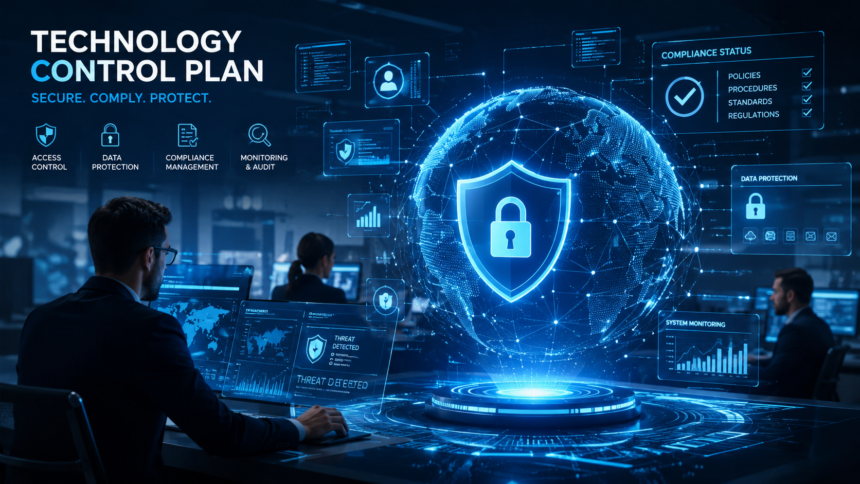
The first component is access control, which defines who can view or use sensitive technology. Only authorized personnel are given permission based on their role.The second component is physical security. This includes locked offices, restricted labs, and secure storage systems for documents and equipment.The third component is information security. It ensures that digital data is protected using encryption, passwords, and secure networks.The fourth component is training and awareness. Employees must understand the rules of handling controlled data and follow compliance procedures.The fifth component is monitoring and auditing. Organizations regularly check systems to ensure rules are being followed correctly.All these components work together to create a strong and reliable control system.
How a Technology Control Plan Works in Real Organizations
To understand what is a technology control plan in practice, we need to see how it works in real organizations.
When a company receives controlled technical data, it first identifies the type of information and its classification. Then, it assigns access levels based on employee roles.
Next, the company sets up physical and digital barriers to prevent unauthorized access. This may include secure servers, restricted zones, and encrypted communication channels.
Employees receive training so they understand how to handle sensitive data properly. The organization also monitors all activities to ensure compliance with regulations.
If any violation occurs, the system immediately alerts compliance officers for action.
Legal Framework Behind Technology Control Plans
Technology Control Plans are not optional in many industries. They are required by law under export control regulations.
In the United States, ITAR and EAR are the main regulatory systems that require strict control of technical data. Many other countries also have similar laws.
These regulations ensure that sensitive technology is not shared with unauthorized foreign individuals or organizations.
To comply with these laws, companies must clearly document their procedures, access rules, and security systems in a Technology Control Plan.
Common Industries That Use Technology Control Plans
Several industries depend heavily on Technology Control Plans to protect their data and maintain compliance.
- Aerospace and defense industries use TCPs to protect military and aviation technologies.
- Engineering companies use them to safeguard design data and technical drawings.
- Software companies use them to control source code and proprietary algorithms.
- Research institutions use them to protect scientific discoveries and experiments.
- Manufacturing companies use them to secure production technologies and processes.
In all these industries, what is a technology control plan becomes a critical concept for security and compliance.
Steps to Develop a Technology Control Plan
Creating a Technology Control Plan requires careful planning and execution.
The first step is identifying controlled technology within the organization. This includes documents, software, equipment, and research data.
The second step is defining access rules. Companies decide who can access specific information and under what conditions.
The third step is implementing physical and digital security measures. This ensures data protection at all levels.
The fourth step is training employees so they understand compliance requirements and security procedures.
The fifth step is documentation. All rules and procedures are written clearly in the Technology Control Plan.
The final step is regular review and updates. The plan must evolve with changes in technology and regulations.
Key Insight
A Technology Control Plan is not just a document; it is a complete system that protects sensitive information and ensures compliance with international laws. It helps organizations manage risk and maintain secure operations in a global environment.
Key points include:
- It controls access to sensitive data
- It ensures legal compliance with export laws
- It protects intellectual property
- It supports secure international collaboration
- It reduces risk of data breaches
Benefits of a Technology Control Plan
A well-designed Technology Control Plan provides many benefits to organizations.
Improves data security and reduces the risk of unauthorized access. It helps companies avoid legal penalties and maintain compliance with international laws. It also strengthens internal processes and improves operational efficiency.
Another major benefit is improved trust. Clients, partners, and government agencies feel more confident working with organizations that follow strict control procedures.
Challenges in Implementing a Technology Control Plan
Even though TCPs are important, organizations face several challenges while implementing them.
One major challenge is employee awareness. If employees do not follow rules properly, the system becomes weak.
Another challenge is cost. Implementing strong security systems requires investment in technology and training.
Keeping the plan updated is also difficult because regulations change frequently.
Despite these challenges, organizations still prioritize TCPs because of their importance in compliance and security.
Future of Technology Control Plans
As technology continues to grow, the importance of Technology Control Plans will also increase. Artificial intelligence, cloud computing, and global data sharing will make security even more important.
Future TCPs will likely include advanced automation, AI-based monitoring, and stronger encryption systems. Organizations will depend more on digital compliance tools to manage their security systems.
In this evolving environment, understanding what is a technology control plan will remain essential for businesses worldwide.
FAQs About Technology Control Plan
What is a Technology Control Plan used for?
A Technology Control Plan is used to protect sensitive technical data and ensure compliance with export control regulations.
Who needs a Technology Control Plan?
Companies in aerospace, defense, engineering, software, and research industries need a Technology Control Plan.
Is a Technology Control Plan legally required?
Yes, in many industries it is required under export control laws such as ITAR and EAR.
What happens if a company does not have a Technology Control Plan?
Without a TCP, a company may face legal penalties, data breaches, and loss of compliance approval.
How often should a Technology Control Plan be updated?
It should be reviewed and updated regularly, especially when regulations or technologies change.
Final Conclusion
Understanding what is a technology control plan is essential for any organization dealing with sensitive technical information. It is more than just a compliance document; it is a complete security framework that protects data, ensures legal compliance, and supports global business operations.
A strong Technology Control helps companies operate safely in international markets while protecting their intellectual property and maintaining trust with partners and regulators.
As global technology continues to expand, the role of Technology Control Plans will become even more important in ensuring secure and responsible innovation.