
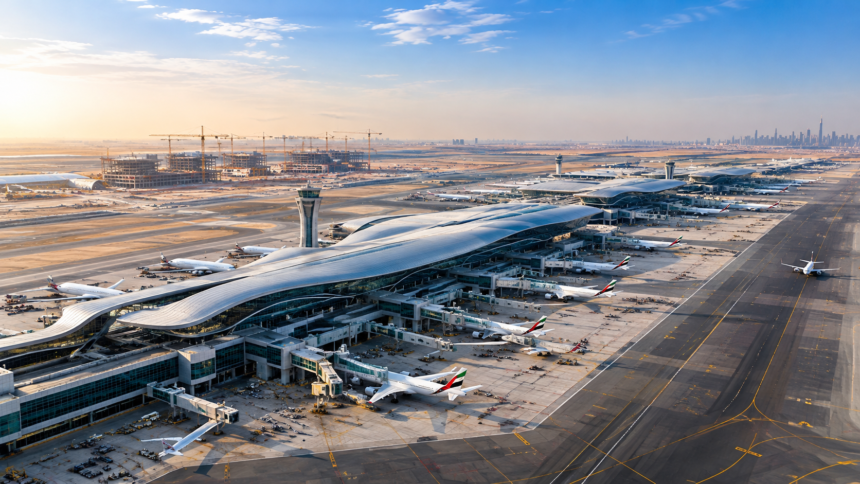
Dubai does not do small. When the city decided its main airport was running out of room, it did not add a terminal. It started building an entirely new one. The Al Maktoum Airport in Dubai is now moving ahead is planned to turn Al Maktoum International Airport (DWC) into the largest aviation hub on the planet. At full build-out, it should handle more than 260 million passengers and 12 million tonnes of cargo every year.
- Overview of the Al Maktoum International Airport Expansion
- Latest Al Maktoum Airport Expansion Plans and Project Timeline
- Passenger Capacity, Runways and New Airport Facilities
- What the Expansion Means for Travellers Today
- How the Airport Expansion Will Benefit Dubai’s Economy
- Dubai South Development and Real Estate Opportunities
- Future Travel, Cargo and Transportation Connectivity
- Challenges and Long-Term Considerations
- Frequently Asked Questions About Al Maktoum Airport Expansion
- Conclusion
So why the rush? Dubai International Airport (DXB) handled a record 95.2 million passengers in 2025, and airport officials say it is nearing its limits. The city is hemmed in on every side. Al Maktoum International, on the other hand, has open land, space for five runways and a clear plan for growth.
This guide explains what is being built, where the project stands today and what it could mean for travellers, businesses and residents. One honest note before we start: every date and figure below is a plan or a target. Big projects shift, so treat the numbers as the current best picture, not a promise.
Overview of the Al Maktoum International Airport Expansion
Al Maktoum International already exists. It sits in Dubai South, near Jebel Ali, and opened to passengers in 2013. Today it handles cargo, private aviation, and a limited number of passenger flights. Think of it as the seed. The expansion is the tree.
In April 2024, Dubai’s ruler approved the design of a new passenger terminal costing AED 128 billion. Dubai Airports now describes the wider development as a US$35 billion investment. When complete, the site should cover roughly 70 square kilometres, about five times the size of DXB.
How It Differs From Dubai International Airport
DXB opened in 1960 and has served Dubai brilliantly. But it sits inside a busy city, so it cannot spread out. Every extra gate means squeezing something else.
Al Maktoum solves that problem from the ground up. Planners can place runways, terminals, cargo areas, and transport links exactly where they work best. DXB is a constrained city airport. DWC is a purpose-built mega hub.
The Long-Term Vision
Dubai plans a gradual handover, not a sudden switch. Over time, flights will move from DXB to Al Maktoum as new capacity opens. Reports point to a transition window between 2032 and 2035, with Emirates and flydubai expected to be the main users. That staged approach protects passengers from chaos while the new airport proves itself.
Latest Al Maktoum Airport Expansion Plans and Project Timeline
If you remember only one date, make it 2032. In June 2026, the Government of Dubai Media Office confirmed that the first phase is on schedule to begin operations in 2032. That date marks the opening of phase one. It does not mark the end of the whole project.
Construction Progress So Far
The work is real and visible. Dubai’s leadership reports contracts worth AED 13 billion under execution and more than 10 million work hours completed in 15 months. Dubai Airports CEO Paul Griffiths says about 17,000 piles are already in the ground and 45 million cubic metres of earth have been moved.
More is coming. Officials expect to award another AED 55 billion or so in contracts in the coming months. In August 2026, Dubai awarded the automated people mover contract to a consortium of Larsen & Toubro and Mitsubishi Heavy Industries, with completion scheduled for December 2031.
Milestones to Watch
Several markers sit between now and the opening:
- A second runway at DWC, expected by the end of 2027.
- The possible first airline move from DXB, with flydubai the likeliest early mover. Dubai Airports has not confirmed it.
- The first 150 million-passenger phase in the early 2030s.
- A gradual transfer of DXB operations between 2032 and 2035.
A Quick Reality Check on Dates
Airports of this size often adjust their schedules. Contracts get awarded in waves, systems need testing, and demand changes. If you plan travel, business, or a property purchase around this project, check the Dubai Media Office and Dubai Airports for fresh updates first.
Passenger Capacity, Runways and New Airport Facilities
Numbers make the scale easier to grasp. The first phase aims to handle about 150 million passengers a year, which is far more than DXB’s 95.2 million in 2025. At full development, capacity rises to more than 260 million passengers.
Key Features of the Airport Expansion
- Planned capacity of more than 260 million passengers a year at full development.
- Five parallel runways in the ultimate plan, with two needed for the first phase.
- Around 400 aircraft stands in phase one, rising to more than 430 at full build-out.
- Two passenger terminals and seven concourses in the completed airport.
- An automated people mover, a metro station and a 6,000-space car park.
How the Runways and Terminals Will Work
Dubai Airports plans to build in stages. Griffiths says only two runways are needed for the first 150 million-passenger phase. The third and fourth will arrive as terminal capacity grows. The fifth will act as a standby when another runway needs maintenance.
The terminals follow the same logic. The wider plan includes up to eight passenger processing nodes, each serving roughly 31 to 32 million travellers. Dubai Airports can add them ahead of demand, so the airport can keep growing through the second half of the century.
The Passenger Experience
Dubai Airports lists a target of 15 minutes for baggage delivery. Officials also talk about fewer queues, more facial recognition and simpler check-in. Griffiths even said he wants passengers to feel they are not at an airport. These are design ambitions, not confirmed procedures, so treat them as goals rather than guarantees.
What the Expansion Means for Travellers Today
Here is the practical bit. For now, DXB remains Dubai’s main gateway, and your next trip will almost certainly use it. Al Maktoum will not replace DXB overnight, and the early airline moves will probably involve a handful of aircraft.
That means everyday airport questions still matter. If you drive to DXB, our guide to Dubai airport parking fees explains the costs for Terminals 1, 2 and 3, and our breakdown of Dubai airport parking charges covers the details. Planning a long layover? Our Shake Shack Dubai airport guide shows where to grab a quick bite.
When airlines announce their moves, check which airport your flight uses before you book. That small step will save a lot of stress during the transition years.
How the Airport Expansion Will Benefit Dubai’s Economy
An airport does more than move planes. It moves money, jobs and ideas. A bigger hub can attract more airlines and routes, and those bring visitors who fill hotels, restaurants and shops.
Tourism and International Trade
Demand already looks strong. DXB welcomed 31.5 million passengers in the first half of 2026, and monthly traffic climbed from 5 million in June to 6.3 million in July. Those numbers suggest extra capacity will eventually be necessary. Meanwhile, planned cargo capacity of 12 million tonnes could strengthen Dubai’s role in global trade.
Investment and Jobs
Money is already flowing in. Emirates chairman Sheikh Ahmed bin Saeed Al Maktoum has said the airline plans to invest between US10billionandUS12 billion in Al Maktoum International. Local media also report that the on-site workforce could grow from about 9,000 to as many as 120,000 people during construction.
Potential Benefits of the Expansion
- Greater capacity for international travel.
- Improved cargo and logistics capabilities.
- Potential business opportunities in Dubai South.
- Additional support for tourism and trade.
A Balanced View
These benefits are possibilities, not guarantees. Airline decisions, global demand and regional conditions will shape the results. Smart readers will see the expansion as a long-term platform for growth, not a promise of instant returns. For more local business coverage, browse our Dubai news section.
Dubai South Development and Real Estate Opportunities
Dubai South is the district built around the airport. Planners designed it to bring aviation, logistics, transport and other businesses together in one area. As the airport grows, the neighbourhood around it will likely grow too.
Demand for Homes, Offices and Warehouses
Think about who the project needs. Construction crews, airline staff, airport operators, logistics firms and suppliers all need somewhere to live and work. That could lift demand for apartments, offices, hotels and warehouses in and around Dubai South. Logistics space looks especially relevant given the 12 million tonnes of planned cargo capacity.
What Buyers and Investors Should Consider
It is tempting to assume a new airport automatically pushes prices up. Reality is less tidy. Property values depend on supply, interest rates, project quality and timing. Recent reports also point to rising housing supply in Dubai as completions accelerate, so buyers should compare options carefully.
Before you commit money, check the developer’s track record, confirm official approvals, compare rental yields with similar areas and follow the airport timeline. We do not predict price rises or promise returns here, and a licensed adviser can help you decide. If you already own property, our guide on how interior design increases Dubai property value shows one practical way to protect and grow its worth.
A Story Told Over Years
The airport opens in phases, so Dubai South will change gradually. Early on, construction and support services will lead activity. Later, as airlines move and passenger numbers climb, the area could mature into a busy commercial and residential district. Patience will serve people better than short-term speculation.
Future Travel, Cargo and Transportation Connectivity
An enormous airport only works if people and freight can reach it easily. That is why connectivity sits at the heart of the plan. Still, most of the new transport infrastructure is proposed or under construction, so it is worth separating plans from what already runs.
The Automated People Mover
Inside the airport, travellers should ride an automated people mover between terminals and concourses. Dubai Airports lists four stations linking the terminal and concourses. Media reports describe a wider network of about 50 kilometres and nine stations, though the final layout may change.
Road and Rail Links
The plans include a metro station and a 6,000-space car park. Dubai Airports is also talking with the Roads and Transport Authority about whether rail stations could handle some airport processing. If that happens, you might drop bags or check in before you even reach the terminal. It remains an idea under discussion, not a confirmed service.
Cargo and Logistics
Freight matters as much as passengers. The completed airport targets 12 million tonnes of cargo a year and will sit inside the Dubai South logistics district. Shorter links between air cargo, roads and nearby trade infrastructure could cut handling times for businesses that ship across regions.
What Operates Today
Right now, Al Maktoum International runs at a much smaller scale than DXB. Most of the transport links above are still planned or under construction. Keep using DXB for most trips, and check with your airline before booking.
Challenges and Long-Term Considerations
Building an airport this size is hard. Crews must move earth, drive piles, lay runways, and install complex systems while two airports keep running. Success needs careful planning and strong coordination.
Scale and Coordination
The numbers speak for themselves. More than 10 million work hours have been completed, and the workforce should grow sharply. Managing many contractors and billions in contracts demands tight scheduling. A delay in one package, such as the people mover, can ripple into others. Meanwhile, more than AED 55 billion in contracts still needs awarding.
Phased Delivery and Transition Risks
Phasing is one of the project’s strengths. Capacity grows with demand, and spending spreads over many years. Even so, moving from DXB to Al Maktoum will take careful management. Airlines, ground handlers, cargo firms and passengers will all adjust. Dubai Airports promises a gradual move, but the order of airline switches is still being worked out.
Traffic, Sustainability and Infrastructure
A mega hub also pressures roads, utilities and nearby neighbourhoods. Traffic management, public transport and parking must keep pace with passenger numbers. Sustainability matters too, because airports use large amounts of energy and water. Watch for official updates on environmental targets as plans develop.
Why Careful Planning Matters
In the end, success depends on delivering on time, controlling costs, and matching capacity to real demand. Fuel prices, regional events, and economic cycles also affect aviation. The phased design and long timeline act as safeguards, giving Dubai room to adjust instead of locking it into one fixed outcome.
Frequently Asked Questions About Al Maktoum Airport Expansion
What is the Al Maktoum Airport expansion project?
It is a phased programme to turn Al Maktoum International Airport (DWC) into Dubai’s main aviation hub. The plan covers new runways, terminals, concourses, cargo facilities and an automated transport system, with a reported US$35 billion investment.
When is the first phase of Al Maktoum Airport expected to open?
The Government of Dubai says the first phase is on track to begin operations in 2032. A second runway should arrive by the end of 2027, and flights should move from DXB gradually between 2032 and 2035.
How many passengers will Al Maktoum International Airport accommodate?
The first phase targets about 150 million passengers a year. At full development, the airport should handle more than 260 million annually.
How will the expansion affect Dubai South?
Dubai South surrounds the airport, so it will likely see more construction, logistics, hospitality and service activity. The size and speed of any property or business impact remain uncertain and depend on market conditions.
What is the difference between Dubai International Airport and Al Maktoum Airport?
DXB is Dubai’s current main airport, but the city around it limits growth. Al Maktoum International is a purpose-built site of about 70 square kilometres with room for five runways and far greater capacity.
Will Al Maktoum Airport become a major global cargo hub?
Planners designed it for that role, with capacity for 12 million tonnes of cargo a year. Whether it gets there depends on airline and shipper decisions, trade patterns, and how fast Dubai delivers the facilities.
Conclusion
The Al Maktoum Airport expansion in Dubai is much more than a bigger runway. It is a long-term answer to a simple problem: DXB cannot keep growing, and Dubai’s appetite for travel and trade keeps rising. The new hub offers the space, flexibility and technology the current airport cannot.
If Dubai delivers as planned, the airport could strengthen the city’s place in global aviation, boost its logistics sector and improve connections for travellers and businesses. The 2032 opening will be the big test, with 150 million-passenger capacity, new runways and an automated transport system coming together.
At the same time, remember that these are plans and projections. Timelines, costs and capacities may shift, and benefits for tourism, trade and property depend on factors beyond the airport itself. For now, the signs look steady: construction is well advanced, and major contracts are still to come.
Keep an eye on three updates: the second runway opening, new contract awards, and the first airline moves from DXB. Together, they will show how quickly Dubai’s next great aviation hub takes shape. For more local stories, visit our blog.