
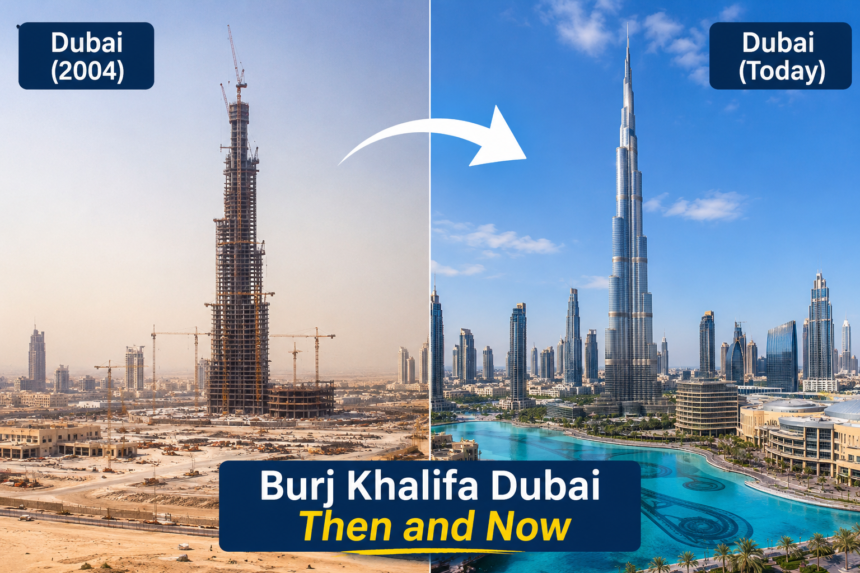
Dubai’s skyline tells the story of a city that has experienced extraordinary change within a relatively short period. Among its most recognisable landmarks, Burj Khalifa stands as a defining symbol of this transformation. Looking at Burj Khalifa Dubai old photos then and now offers an opportunity to understand not only the development of the world’s tallest building but also the wider changes that reshaped Downtown Dubai.
- The History of Burj Khalifa
- When Was Burj Khalifa First Built?
- Why Was Burj Khalifa Constructed?
- Burj Khalifa Dubai Old Photos From 2004 to 2010
- How the Tower Changed Dubai’s Skyline
- Burj Khalifa Then and Now – Before and After Pictures
- Dubai Skyline Today
- Comparing Old and New Dubai
- How Burj Khalifa Transformed Modern Dubai
- Interesting Facts About Burj Khalifa
- Best Places to Capture Burj Khalifa Photos Today
- Why Burj Khalifa Remains Dubai’s Most Iconic Landmark
- Frequently Asked Questions
- Conclusion
Before construction began, the landscape surrounding the future tower looked very different from the internationally recognised destination visitors experience today. The area has since developed into a major urban district featuring residential towers, hotels, shopping destinations, restaurants, public spaces, and cultural attractions.
The transformation becomes particularly interesting when historical construction photographs are compared with modern views of the same location. These images reveal how an ambitious architectural project gradually became an important part of Dubai’s identity.
Understanding this development requires looking beyond the building itself. It involves examining the city’s planning, architectural ambitions, tourism growth, and the changing character of its urban environment.
The History of Burj Khalifa
Burj Khalifa is located in Downtown Dubai, a major development that helped establish a new centre for residential living, business, hospitality, and tourism. Developed by Emaar Properties, the tower was originally known as Burj Dubai before receiving its present name at the time of its official opening in January 2010.
The project emerged during an important period in Dubai’s economic and urban development. The city was investing in large-scale infrastructure, modern residential communities, commercial facilities, and international tourism destinations.
The proposed tower was intended to become a landmark within this wider development. Its extraordinary height and distinctive architecture would give Dubai an internationally recognisable symbol while contributing to the identity of the surrounding district.
Its design was developed by the architectural firm Skidmore, Owings & Merrill. The tower’s three-part footprint draws inspiration from the regional desert flower Hymenocallis, while its architectural language incorporates elements associated with Islamic design.
When Was Burj Khalifa First Built?
Construction of Burj Khalifa began in September 2004. The early stages involved extensive site preparation, excavation, and foundation work to support a structure of unprecedented height.
The building gradually emerged from the construction site as engineers and construction teams completed the foundations, reinforced concrete structure, upper floors, and exterior façade.
Several important milestones marked its development:
- 2004: Construction began, with excavation and foundation preparation forming part of the initial work.
- 2005: Work on the main tower structure progressed.
- 2007: The building reached the 100-floor milestone.
- 2008: The tower surpassed previous height records and became the world’s tallest man-made structure.
- 2009: The exterior cladding was completed.
- January 4, 2010: Burj Khalifa officially opened.
These milestones illustrate the complexity of constructing such a tall building. The project required extensive engineering coordination, specialised construction techniques, and careful planning.
Why Was Burj Khalifa Constructed?
Burj Khalifa was developed as a central feature of Dubai’s wider urban vision. The project aimed to establish an internationally recognised landmark while supporting the growth of Downtown Dubai as a major residential and commercial destination.
Its purpose extended beyond creating a record-breaking structure. The development incorporated residential apartments, corporate offices, hospitality facilities, and visitor attractions.
The tower also helped give the surrounding district a distinctive identity. Its presence created a recognisable focal point around which other developments, public spaces, and tourism facilities could be organised.
The project reflects a broader approach to urban development in which architecture, commercial activity, residential living, and tourism contribute to the character of a modern city.
Burj Khalifa Dubai Old Photos From 2004 to 2010
Historical photographs provide a valuable perspective on the construction of Burj Khalifa. Images from different years document how the building gradually rose above the surrounding landscape.
Early photographs generally show a construction site dominated by excavation work, machinery, cranes, and foundation preparation. As the project progressed, the developing structure became increasingly visible from different parts of Dubai.
By comparing photographs from 2004, 2006, 2008, and 2009, viewers can follow the development of the tower and understand the scale of the engineering work involved.
Early Construction Photos
The earliest construction photographs show the preparation of the site and the extensive foundation work required for a skyscraper of this height.
During the initial stages, the tower was not yet visible above the surrounding landscape. Much of the work focused on establishing a foundation capable of supporting the enormous structure.
As the building rose, construction photographs began capturing its distinctive stepped profile. The tower’s changing shape became increasingly noticeable as additional levels were completed.
By 2007 and 2008, the structure had become a prominent feature of Dubai’s skyline. Its increasing height also changed the way people viewed the developing Downtown Dubai district.
The final construction stages involved completing the exterior façade and preparing the building for its official opening.
Suggested historical image placement: Add three verified archival photographs showing the early construction site, the tower during its vertical development, and the completed exterior in 2009.
How the Tower Changed Dubai’s Skyline
Dubai already had an established skyline before Burj Khalifa was constructed. Commercial buildings, hotels, residential towers, and major infrastructure projects had contributed to the city’s growth.
However, the introduction of an 828-metre tower created an entirely different visual landmark.
Its height made it visible across a considerable part of the city, while its architectural design established a distinctive profile that became closely associated with Dubai.
The surrounding district also changed as construction and development progressed. New buildings, landscaped areas, roads, retail destinations, and public spaces contributed to the emergence of modern Downtown Dubai.
The tower therefore became part of a much wider transformation rather than an isolated architectural achievement.
Burj Khalifa Then and Now – Before and After Pictures
Comparing historical and contemporary photographs is one of the most effective ways to understand the development of Downtown Dubai.
The differences are visible in the skyline, surrounding buildings, public spaces, transport infrastructure, and the overall appearance of the district.
Dubai Before Burj Khalifa
Before the tower was constructed, the area that would become its immediate surroundings did not have the recognisable appearance it has today.
Historical views show a less developed landscape compared with the modern district. The surrounding urban environment was undergoing change, but the concentration of high-rise buildings and major attractions now associated with Downtown Dubai had not yet emerged.
It is important to recognise that Dubai was already a growing international city during this period. Its development had begun long before Burj Khalifa, supported by investment in trade, infrastructure, commercial activity, and tourism.
The tower became one of the most visible symbols of a much longer process of urban transformation.
Historical photographs are particularly useful because they preserve details that may no longer be visible in the modern city. They can reveal earlier road layouts, open areas, construction activity, and the gradual expansion of the surrounding skyline.
Dubai Skyline Today
Modern Downtown Dubai presents a considerably different urban landscape.
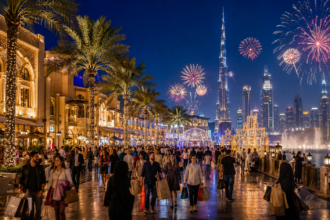
The completed Burj Khalifa rises above a district containing residential buildings, hotels, shopping destinations, restaurants, landscaped walkways, and public attractions.
Dubai Mall and the Dubai Fountain have also helped establish the area as a major destination for international visitors.
The tower remains the defining feature of this environment. Its height creates a strong visual contrast with the surrounding architecture, making it a prominent subject for photographers throughout the day.
Visitors interested in exploring more landmarks can discover other famous places to visit in Dubai and understand how different parts of the city contribute to its modern identity.
Comparing Old and New Dubai
The contrast between old and modern Dubai is not limited to the height of buildings. It also reflects changes in how urban spaces are designed, used, and experienced.
A comparison of historical and modern photographs highlights several important developments:
Urban landscape: Earlier views of the Downtown Dubai area show a less established district, while modern photographs capture a developed urban environment with residential and commercial buildings.
Architecture: The modern skyline includes a wider range of high-rise structures, distinctive façades, and contemporary architectural designs.
Public spaces: The development of landscaped walkways, pedestrian areas, and waterfront attractions has changed how visitors experience the district.
Tourism: The area has become an established destination for sightseeing, accommodation, shopping, and entertainment.
Infrastructure: Roads, transport connections, and supporting facilities have developed alongside the surrounding buildings.
For the most meaningful before-and-after comparison, photographs should ideally be taken from the same location and in a similar direction. This approach makes changes in building heights, street layouts, and the surrounding environment easier to identify.
How Burj Khalifa Transformed Modern Dubai
Burj Khalifa has played an important role in shaping the international image of Dubai. Its distinctive silhouette appears in travel photography, architectural publications, tourism campaigns, and images of the city’s modern skyline.
However, its influence should be understood within the wider development of Downtown Dubai.
The district combines residential communities, retail spaces, hospitality facilities, entertainment venues, and public attractions. This mixture of uses creates an environment that attracts visitors throughout the year.
The tower also demonstrates how large architectural projects can influence the identity of their surrounding areas. Its presence gives the district a central landmark and creates a recognisable focal point for urban development.
Tourism is another important part of its influence. Visitors travel to Dubai to experience the observation decks, enjoy panoramic city views, photograph the building, and explore the surrounding attractions.
Beyond Downtown Dubai, the city’s development offers many other experiences. Travellers looking for exciting things to do in Dubai can explore its beaches, cultural districts, shopping destinations, and entertainment facilities.
The continued development of the city shows that Dubai’s transformation did not end with the completion of Burj Khalifa. New residential areas, transport facilities, commercial districts, and tourism destinations continue to influence its urban landscape.
Interesting Facts About Burj Khalifa
Burj Khalifa is recognised for its height, but its architectural and engineering characteristics are equally interesting.
Here are several important facts:
- Height: The tower stands 828 metres tall, making it the world’s tallest building.
- Official opening: Burj Khalifa officially opened on January 4, 2010.
- Original name: The project was originally called Burj Dubai before being renamed Burj Khalifa.
- Architectural design: The building was designed by Skidmore, Owings & Merrill, with Adrian Smith serving as consulting design partner.
- Design inspiration: Its three-part footprint draws inspiration from the Hymenocallis desert flower.
- Mixed-use development: The building contains residential, hospitality, and office spaces.
- Observation experiences: Visitors can enjoy panoramic views from its observation facilities, including Levels 124 and 125.
- Construction: The project involved advanced structural engineering and extensive reinforced concrete construction.
These features demonstrate why the building remains an important subject for architects, engineers, urban planners, and travellers.
Best Places to Capture Burj Khalifa Photos Today
Burj Khalifa offers numerous photographic opportunities, and the surrounding district provides different perspectives throughout the day.
The best location depends on whether visitors want a wide skyline photograph, a close architectural view, or a nighttime image featuring the illuminated tower.
1. Burj Park
Burj Park offers attractive views of Burj Khalifa and the surrounding Downtown Dubai architecture.
Its open areas provide opportunities to capture the tower within the wider urban landscape. It is particularly suitable for photographs that include the building’s full height.
2. Dubai Fountain Waterfront
The waterfront surrounding the Dubai Fountain is one of the most recognisable photography locations in Downtown Dubai.
The combination of the tower, water features, and surrounding buildings creates an interesting composition. Evening photography can be particularly appealing when the surrounding architecture is illuminated.
3. Dubai Mall Area
The outdoor areas around Dubai Mall provide several different angles for photographing Burj Khalifa.
Visitors can capture the tower from close to its base or move farther away to include more of the surrounding skyline.
The area is also convenient for travellers who want to combine sightseeing with shopping and dining.
4. Burj Khalifa Observation Deck
For a different perspective, visitors can explore the observation decks on Levels 124 and 125.
These viewing areas provide panoramic views of Dubai, including its surrounding urban districts, roads, and coastline.
Photography enthusiasts should consider visiting during daylight for clearer city views or around sunset for changing light conditions.
Travellers interested in discovering more experiences can explore popular activities in Dubai before planning their itinerary.
Another option is to explore Dubai on a city tour, which can help visitors discover several landmarks during their stay.
Why Burj Khalifa Remains Dubai’s Most Iconic Landmark
Burj Khalifa remains one of Dubai’s most recognisable landmarks because it combines architectural distinction with a significant place in the city’s development.
Its height and design make it immediately identifiable, while its location in Downtown Dubai connects it with one of the city’s most established tourism and lifestyle districts.
The building also represents a period when Dubai was investing heavily in major infrastructure, commercial development, and international recognition.
For visitors, it provides an opportunity to experience the city from above. For photographers, it offers a subject that changes in appearance depending on the weather, time of day, and viewing location.
Its significance also lies in the contrast between historical and contemporary Dubai. Looking at older photographs makes it easier to appreciate the scale of the changes that have taken place around the tower.
At the same time, understanding Dubai’s development requires looking beyond its modern skyline. The city’s heritage, traditional neighbourhoods, and cultural attractions remain important parts of its identity.
Visitors interested in this side of the city can also explore Dubai’s historical attractions to gain a broader understanding of its past.
Frequently Asked Questions
1. When Did Construction of Burj Khalifa Begin?
Construction began in September 2004. The project progressed through several major stages, including foundation work, construction of the main tower, installation of the exterior façade, and preparation for its official opening in January 2010.
2. What Did the Area Around Burj Khalifa Look Like Before Construction?
Before the tower was built, the surrounding landscape looked considerably different from modern Downtown Dubai. The district had not yet developed the concentration of skyscrapers, hotels, shopping destinations, and public attractions that visitors see today.
3. How Tall Is Burj Khalifa?
Burj Khalifa is 828 metres tall, or approximately 2,716.5 feet. It holds the record as the world’s tallest building.
4. When Did Burj Khalifa Officially Open?
Burj Khalifa officially opened on January 4, 2010. The opening marked the completion of one of the most significant architectural projects in Dubai’s modern development.
5. Where Can Visitors Take the Best Burj Khalifa Photographs?
Popular photography locations include Burj Park, the Dubai Fountain waterfront, the outdoor areas around Dubai Mall, and the observation decks inside the tower. Each location offers a different perspective of the building.
Conclusion
The transformation of Burj Khalifa from an ambitious construction project into one of the world’s most recognised architectural landmarks reflects an important chapter in Dubai’s urban development.
Historical photographs from the early construction period reveal a landscape that looks very different from the modern Downtown Dubai district. Over the years, the tower’s construction and the development of its surroundings helped create a destination recognised for its architecture, tourism facilities, and modern urban environment.
Comparing Burj Khalifa’s early construction photographs with contemporary skyline views provides a valuable perspective on how much the city has changed. It also highlights the relationship between architecture, infrastructure, tourism, and urban planning.
For anyone interested in Dubai’s history, architecture, or travel experiences, exploring these changes offers a deeper understanding of the city’s development.
For more informative articles, destination guides, and insights into Dubai’s landmarks, visit dubaiprsubmission.com.
If you would like more information about Dubai’s destinations, attractions, or travel-related features, Contact our team. Our website is dedicated to sharing useful information that helps readers discover different aspects of Dubai.