

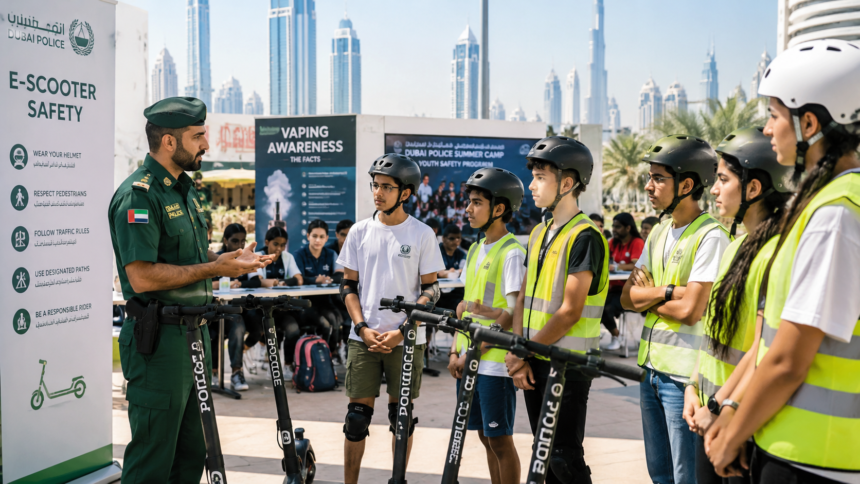
Every summer, thousands of students step away from classrooms and into a season of discipline and learning. This year, the Dubai Police summer camp for vaping and e-scooter safety among youth has taken center stage. It addresses two of the most pressing safety concerns facing teenagers today.The program reflects a shifting approach to youth development in Dubai. Families, schools, and law enforcement now work together to protect young residents from preventable risks. This collaborative spirit defines the entire camp experience.
- Why Dubai Police Launched a Youth-Focused Summer Camp This Year
- Tackling the Rising Vaping Trend Among Teenagers
- How the Camp Builds Awareness Against Vaping
- Health Risks Teenagers Often Overlook
- Warning Signs Parents Should Watch For
- Addressing E-Scooter Safety Concerns for Young Riders
- Why Parental Accountability Matters
- Common E-Scooter Rules Every Young Rider Should Know
- Inside the Dubai Police Summer Camp Experience
- Skills and Training Offered During the Program
- What Makes This Year’s Program Different
- Role of Parents in Supporting Road and Lifestyle Safety
- How Schools and Communities Reinforce These Lessons
- Common Challenges in Enforcing Youth Safety Rules
- Technology Supporting Safety Enforcement
- The Bigger Picture: Dubai’s Vision for Safer Streets
- Measuring Success Beyond Enrollment Numbers
- Benefits of Early Safety Education for Teenagers
- Long-Term Impact on Community Safety
- Tips for Parents to Reinforce Safety at Home
- Frequently Asked Questions
- Conclusion
This article breaks down why the camp matters, what students learn, and how parents can extend these lessons at home. It also covers the rules teenagers need to know before riding an e-scooter or facing peer pressure around vaping.
Why Dubai Police Launched a Youth-Focused Summer Camp This Year
As the academic year wrapped up, Dubai Police rolled out its annual free summer program with a renewed focus on community safety. Officials redirected attention toward vaping and unsafe e-scooter use among teenagers. The decision came from data, parental concerns, and a noticeable rise in related incidents.Demand for enrollment has been overwhelming. Within hours of registration opening, thousands of families rushed to secure spots. Several centers reached full capacity within just a few hours.
The program welcomes students between ages 11 and 18, regardless of nationality. It blends military-style discipline with practical education. Officers introduce real consequences and real stories, not just rules.
Tackling the Rising Vaping Trend Among Teenagers
Vaping has quietly become a major health concern among school-age children in Dubai. Many teenagers view e-cigarettes as harmless, unaware of the nicotine dependency and respiratory risks involved. Devices are small, easy to conceal, and often free of any telltale smell.
Legally, vape products remain restricted to adults aged 18 and above. Selling these products to minors carries serious financial penalties. Despite this, peer pressure and online marketing continue to draw curious teenagers toward experimentation.
How the Camp Builds Awareness Against Vaping
Instructors avoid scare tactics and rely on facts instead. They explain the science behind nicotine addiction and share real testimonies. This approach helps teenagers internalize the message rather than dismiss it.
The Dubai Police summer program for vaping and e-scooter safety among youth reaches students in a setting where they feel comfortable asking questions. Officers often invite health professionals and counselors to speak directly with students.
Health Risks Teenagers Often Overlook
Nicotine affects the developing brain differently than it affects adults. Teenagers who vape regularly face a higher risk of dependency than those who start later in life. Many also underestimate how quickly cravings can build.Respiratory irritation, reduced lung capacity, and elevated heart rate are common short-term effects. Long-term use can worsen these issues significantly. Health experts increasingly link early vaping habits to later tobacco use as well.
Camp instructors walk students through these risks using simple, relatable language. They avoid medical jargon and instead focus on everyday consequences teenagers can picture. This makes the information easier to remember.
Warning Signs Parents Should Watch For
A sudden change in friend groups can sometimes signal new habits forming. Frequent coughing, unexplained mood swings, or unfamiliar fruity scents on clothing are also worth noticing. None of these signs confirm vaping on their own, but together they warrant a closer look.
Parents who notice unfamiliar devices, charging cables, or small pods in a child’s bag should approach the topic calmly. Reacting with anger often pushes teenagers to hide the habit further. A steady, non-judgmental conversation tends to open more doors than a confrontation does.
Teachers and counselors can also help identify these patterns early. Many schools now train staff to recognize subtle behavioral shifts linked to nicotine use. Early conversations, whether at home or school, often prevent the habit from becoming a long-term dependency.
Addressing E-Scooter Safety Concerns for Young Riders
E-scooters have become a common sight across Dubai’s streets and communities. Their growing popularity among teenagers has also led to a rise in accidents. Many incidents involve minors riding without supervision or proper safety gear.Current rules require riders to be at least 16 years old and wear a helmet at all times. Scooters must stay within a 20 km/h speed limit and remain on approved tracks. Riding on highways or unauthorized routes can lead to confiscation and fines.
Doctors treating young patients often see wrist, ankle, and shoulder injuries among adolescent riders. Some cases involve fractures requiring hospitalization. These outcomes highlight why early education matters so much.
Why Parental Accountability Matters
Authorities have begun holding parents more directly responsible for a child’s e-scooter use. If a minor causes harm while riding unsafely, families can face legal consequences. This shift encourages closer supervision at home.
Many parents are unaware their child has modified a scooter to bypass speed limits. Regular checks on the device, combined with honest conversations, can prevent serious accidents. Awareness at home complements what students learn during camp sessions.
Common E-Scooter Rules Every Young Rider Should Know
The following safety practices form the foundation of responsible scooter use for teenagers:
- Riders must be at least 16 years old, with younger children always supervised by an adult.
- A properly fitted helmet and reflective clothing are mandatory at all times.
- Scooters are built for a single rider, so carrying passengers is strictly prohibited.
- Riders should use designated tracks instead of highways or busy pedestrian footpaths.
- Dismounting at crossings and keeping a safe distance from traffic helps prevent collisions.
- Working lights, a horn, and reliable brakes are required for safe nighttime riding.
These guidelines sit at the heart of the Dubai Police summer camp for vaping and e-scooter safety among youth.
Inside the Dubai Police Summer Camp Experience
Students notice a quick shift away from typical classroom routines. Daily schedules include physical training, teamwork exercises, and structured discipline drills. The atmosphere encourages students to step outside their comfort zones.
Trainers emphasize movement, collaboration, and security awareness throughout each session. Students participate in activities that show the real-world impact of unsafe choices. This hands-on method helps lessons stick far longer than a classroom lecture.
Skills and Training Offered During the Program
Beyond core safety messaging, the camp introduces several skill-building activities:
- Military and fitness training that builds endurance, teamwork, and self-discipline.
- First aid courses that teach calm responses during emergencies.
- Traffic and penalties law sessions explaining the consequences of reckless behavior.
- Cycling and personal mobility safety courses focused on responsible riding.
- Field visits and lectures led by road safety and adolescent health specialists.
This mix of discipline and practical education gives students tools they can apply daily.
What Makes This Year’s Program Different
Previous editions of the camp leaned more heavily on general fitness and discipline training. This year’s version places safety education at the core of nearly every activity. Instructors weave vaping and e-scooter lessons into physical drills, group discussions, and even mealtime conversations.Officers also rely more on real data than in past years. Accident statistics, hospital records, and enforcement numbers help illustrate the scale of these issues. Students respond differently when shown actual figures rather than general warnings.
Another shift involves student involvement in shaping awareness messages. Older participants sometimes help design short presentations for younger groups. This peer-to-peer approach often carries more weight than messages delivered solely by adults.
Role of Parents in Supporting Road and Lifestyle Safety
Police officials stress that schools and camps cannot solve these issues alone. Parents shape a child’s habits long before any program begins. Families sometimes unintentionally enable risky behavior by allowing unsupervised scooter use.
This message resonates strongly within camp sessions. Officers encourage open dialogue between parents and children at home. Setting clear boundaries and monitoring scooter use can significantly reduce a teenager’s exposure to harm.Safe alternatives already exist across the city. Indoor running tracks and supervised cycling paths give teenagers a chance to stay active without unnecessary risk.
How Schools and Communities Reinforce These Lessons
Educational institutions across Dubai have started integrating similar safety messages into their own programs. Some schools partner with local police departments to host awareness sessions. Others rely on student-led initiatives to spread the message among peers.These efforts complement what teenagers learn at the summer camp. They create a more consistent safety culture throughout the year, rather than a single seasonal push.
Community centers and shopping malls have also introduced supervised activity zones. These spaces give young people safer places to socialize and stay active. They reduce the temptation to ride scooters on unauthorized roads.When schools, families, and law enforcement align their messaging, teenagers receive consistent reinforcement. This consistency plays a major role in shaping long-term behavior during the teenage years.
Common Challenges in Enforcing Youth Safety Rules
Even with clear regulations, enforcement remains difficult. Vape devices are compact and easy to hide from teachers and parents. Many students rely on older friends or unverified sellers to obtain these products.A similar challenge applies to e-scooters. Teenagers sometimes ride during hours when supervision is minimal. Some families remain unaware that a scooter has been modified until an accident occurs.
Closing these gaps requires more than rules on paper. It calls for continuous dialogue between officers, schools, and parents. The Dubai Police summer camp for vaping and e-scooter safety among youth helps close this gap by reaching students early.
Technology Supporting Safety Enforcement
Reporting tools now allow residents to flag unsafe riding behavior directly to authorities. Digital tracking systems also help officials identify repeat violations more efficiently. These tools complement in-person education rather than replacing it.
Schools have started using similar reporting channels for vaping incidents. Anonymous reporting options encourage students to share concerns without fear of social backlash. Combined with classroom education, these systems create a stronger overall safety net.
The Bigger Picture: Dubai’s Vision for Safer Streets
This camp fits into a much larger road safety strategy spanning several years. Authorities have expanded cycling infrastructure and introduced stricter accountability measures for parents. These efforts support a broader goal of reducing road fatalities citywide.
Public health officials have also intensified their focus on youth vaping. Schools now work alongside counselors to identify early warning signs. Early intervention often makes a significant difference for struggling teenagers.
Measuring Success Beyond Enrollment Numbers
Officials track more than how many students sign up each year. They also monitor repeat violations, accident reports, and feedback from schools after the program ends. These indicators help determine whether the lessons are actually changing behavior.
Early results suggest a positive trend. Centers running structured safety modules report fewer disciplinary issues related to scooter misuse among returning students. Feedback from parents has also been encouraging, with many noting more responsible behavior at home.
Authorities plan to expand similar modules to additional centers in future years. The goal is to reach more students without diluting the quality of instruction. This careful scaling reflects a long-term commitment rather than a short-lived campaign.
Benefits of Early Safety Education for Teenagers
Structured awareness programs deliver advantages that extend well beyond summer:
- Improved understanding of road rules, reducing risky scooter behavior later in life.
- Greater resistance to peer pressure, particularly around vaping and harmful trends.
- Stronger sense of personal responsibility carried into adulthood.
- Increased confidence in handling emergencies through basic first aid knowledge.
- Better communication with parents regarding safety concerns and boundaries.
These outcomes show why early, consistent education matters so much during adolescence.
Long-Term Impact on Community Safety
Programs like this one shape more than individual behavior. They contribute to a broader culture of accountability across the city. Teenagers who internalize these lessons often pass similar values on to younger siblings and friends.
Over time, this ripple effect supports Dubai’s wider goal of reducing road fatalities and protecting youth health. A single summer program cannot solve every challenge alone, but it builds a foundation that lasts well beyond the season.
Tips for Parents to Reinforce Safety at Home
Parents can take a few simple steps to support these lessons. Setting clear rules around approved riding zones and curfews helps establish boundaries early. Checking that safety gear remains in good condition keeps children protected on every ride.
Open conversations about vaping work best when they avoid judgment. Teenagers respond better to honest discussions about health risks than to strict lectures. Encouraging children to speak up about peer pressure creates a safer home environment.
Frequently Asked Questions
What age group can join the Dubai Police summer camp?
The program welcomes students between 11 and 18 years old, regardless of nationality, making it accessible to a wide range of families.
Why did the camp shift its focus toward vaping and e-scooter safety?
Rising incidents involving underage vaping and reckless scooter use prompted authorities to address these specific risks this year.
What is the legal age for riding an e-scooter in Dubai?
Riders must be at least 16 years old, wear a helmet, avoid carrying passengers, and stay within designated tracks and speed limits.
Is vaping legal for teenagers in the UAE?
No. Vape products remain restricted to individuals aged 18 and above, and selling them to minors carries strict financial penalties.
How can parents reinforce these safety lessons at home?
Parents can set clear boundaries around scooter use, maintain open conversations about vaping risks, and stay involved in their child’s daily routine.
Conclusion
The Dubai Police summer camp for vaping and e-scooter safety among youth offers a thoughtful response to two growing challenges facing teenagers across the emirate. By combining structured discipline, practical education, and open communication, the program equips young people to make safer choices both on and off the road.
As enrollment numbers continue to rise each year, families clearly value this proactive, community-driven approach to youth safety. With continued collaboration between police, schools, and parents, Dubai is steadily raising a generation of teenagers who understand the real consequences of their choices.These lessons do not end when the summer season closes. They carry forward into how teenagers behave on the road, how they respond to peer pressure, and how they support friends facing similar challenges. That lasting impact is ultimately what makes this initiative worth the investment year after year.