
Desert climates are among the most difficult places for modern engineering to work. As the world’s temperatures rise, heatwaves last longer, and cities grow quickly, the need for infrastructure that can withstand and work in extreme heat has grown. In this context, heat-resistant technology, or engineering solutions for desert climates, has become a very important area of new ideas.
- Desert climates have certain environmental features
- What is the idea of heat-resistant technology in engineering?
- High-Temperature Performance Materials
- Architectural design that works well in the heat in desert areas
- Passive cooling as a main engineering strategy
- Active cooling systems that work in very hot weather
- How to Make and Store Energy in the Desert
- Transportation Infrastructure Designed to Withstand Heat
- Water Systems and Thermal Protection
- Smart Technologies Helping Engineering That Can Handle Heat
- Being responsible for the environment and being sustainable
- New Ideas for Heat-Resistant Engineering in the Future
- Questions and Answers
- Conclusion: Making the Future Stronger for Desert Climates
When exposed to high temperatures for a long time, traditional building methods and materials often don’t work well. Buildings get too hot, roads bend, energy systems work less well, and water infrastructure becomes weak. Engineers are working on new technologies that not only resist heat but also make things more sustainable and work better over time to get around these problems.
This article looks at the most important engineering methods, materials, and technologies that make it possible to build safely and efficiently in desert climates.
Desert climates have certain environmental features
Extreme heat during the day, strong sunlight, low humidity, and little rain are all things that make a desert. Temperatures can go above 50°C, which puts constant thermal stress on buildings and other infrastructure. Rapid cooling can happen at night, which makes materials expand and contract over and over again.
These conditions make materials wear out faster and make systems less reliable. Mechanical equipment has to work harder than it should, which raises the costs of maintenance and the chances of failure. Infrastructure life is greatly shortened without specialised engineering methods.
To make good heat-resistant engineering solutions, you need to know about these environmental pressures.
What is the idea of heat-resistant technology in engineering?
Heat-resistant technology is the study of engineering systems, materials, and design methods that keep working well even when the temperature is very high. This technology is more about managing heat than just being able to withstand it in desert climates.
Smart design choices can control, reflect, absorb, or change the direction of heat. To save energy while keeping comfort and safety, passive solutions are often used with advanced mechanical systems.
Engineers make systems that are strong, efficient, and long-lasting by using heat-resistant technology at every stage of planning and building.
High-Temperature Performance Materials
Material innovation is the basis for heat-resistant technology, which is engineering solutions for hot, dry places. Conventional materials break down quickly when exposed to heat for long periods of time, which causes cracks, warping, and damage to the surface.
A lot of people use high-performance concrete because it can handle thermal cycling. Additives are used to make the material less likely to crack and last longer. To keep roofs and outside walls from absorbing too much heat, reflective coatings are put on them.
More and more, ceramic composites and heat-resistant polymers are being used in mechanical and industrial settings. These materials stay strong at high temperatures and don’t need as much care over time. Choosing the right materials can greatly improve the reliability of infrastructure.
Architectural design that works well in the heat in desert areas
In desert climates, how a building is designed is very important for keeping it cool. Structures are built to keep the inside comfortable without relying too much on air conditioning by cutting down on heat gain.
The direction of the building is carefully planned so that it doesn’t get too much direct sun during peak hours. To slow down heat transfer, thick walls and materials with a lot of thermal mass are used. Shading devices, windows set back, and surfaces that reflect light all help to reduce the effects of the sun even more.
When buildings are designed to be as energy-efficient as possible, they use less energy and make the inside of the building more comfortable and stable.
Passive cooling as a main engineering strategy
One of the best and most long-lasting ways to cool down in the desert is to use passive cooling. These systems are very energy-efficient because they use natural processes instead of machines.
Strategic openings that let hot air out and cool air in create natural ventilation. The goal of courtyards and shaded areas is to make microclimates that cool down the area around them.
To keep heat from getting into buildings from the outside, thermal insulation materials with low conductivity are used. People like passive cooling systems because they work even when the power goes out and save money in the long run.
Active cooling systems that work in very hot weather
Active cooling systems are still needed in a lot of cases. In desert climates, though, these systems need to be built to handle high temperatures outside.
High-efficiency air conditioners have parts that can handle heat and advanced refrigerants. Smart control systems automatically change the cooling levels based on what is happening at the time, which saves energy.
Using renewable energy sources like solar power makes things even more efficient. Active cooling systems can be reliable and cost-effective even in very hot weather if they are set up correctly.
How to Make and Store Energy in the Desert
Energy systems in deserts have both problems and chances. Equipment may not work as well in hot weather, but lots of sunlight is a great source of renewable energy.
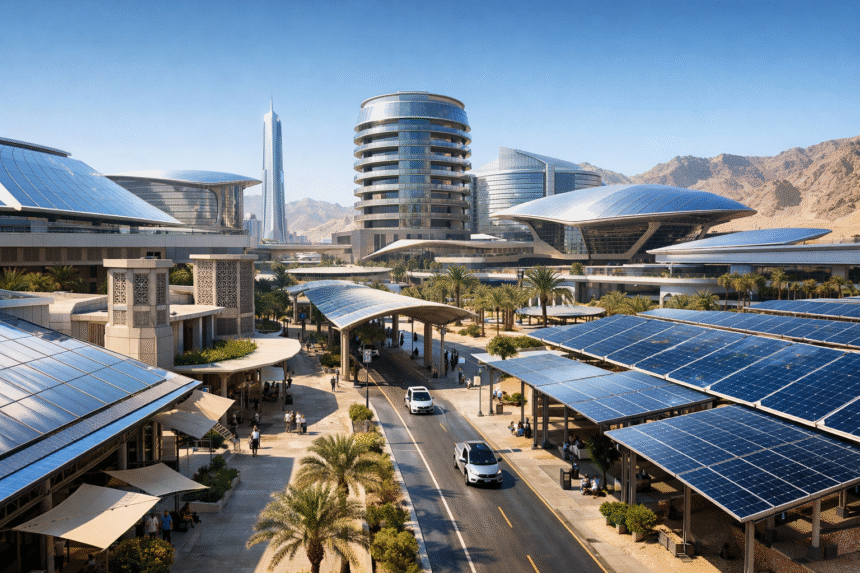
Solar power systems are built with photovoltaic panels that can withstand heat and protective coatings. To keep panels working well in very hot weather, cooling systems are used. Dust-resistant designs make sure that performance stays the same.
Energy storage systems are also made to work in high temperatures. Thermal storage systems and advanced batteries make things stable and dependable. These new ideas make deserts great places to make clean energy.
Transportation Infrastructure Designed to Withstand Heat
In desert climates, transportation systems are always under thermal stress. Roads get softer, rail tracks get longer, and parts of vehicles get too hot.
To solve these problems, road builders use materials that can withstand heat. Reinforced concrete and modified asphalt stay strong even when it’s hot. To keep from bending, rail systems have expansion joints and metals that can handle heat.
Vehicles that work in deserts have better cooling systems and stronger parts. These engineering solutions make sure that things are safe, work well, and last longer.
Water Systems and Thermal Protection
In desert climates, a lack of water is a big problem. High temperatures make water evaporate faster and put stress on water systems.
To keep the heat down, pipelines and storage tanks are insulated. Heat-resistant membranes and parts are built into desalination plants so that they can keep running even in very hot weather.
Smart monitoring systems keep an eye on temperature and pressure, which makes it possible to do maintenance before it is needed and distribute water more efficiently. These solutions help make sure that water is always available in tough places.
Smart Technologies Helping Engineering That Can Handle Heat
Smart technology is now a necessary part of modern heat-resistant engineering. Sensors and automated systems keep an eye on the temperature, humidity, and how well the system is working in real time.
Building management systems automatically change the shading, ventilation, and cooling. Predictive analytics help industrial facilities avoid overheating and equipment failure.
Engineering systems become flexible, efficient, and strong when they use digital intelligence.
Being responsible for the environment and being sustainable
Making heat-resistant technology that works in desert climates is one of the main goals of sustainability. Long-lasting materials cut down on resource use by making infrastructure last longer. Energy-efficient designs reduce both carbon emissions and costs of running a business.
Using renewable energy and passive cooling techniques also helps the environment. Responsible engineering makes sure that building in the desert doesn’t hurt ecosystems that are already weak.
New Ideas for Heat-Resistant Engineering in the Future
Ongoing research and technological progress are what will shape the future of heat-resistant engineering. New materials are being made that can handle heat better and have less of an effect on the environment.
People think that artificial intelligence will make predictive maintenance and system optimisation better. People are planning smart desert cities that will be good for the environment, use technology, and be comfortable for people.
As the world’s temperatures rise, the need for advanced engineering solutions that can withstand heat will keep growing.
Questions and Answers
In engineering, what is heat-resistant technology?
It includes materials, systems, and designs that make it possible for infrastructure to work well even when it’s very hot.
What makes desert climates need special solutions?
Standard engineering systems break down when exposed to high temperatures for long periods of time, so heat-resistant solutions are necessary.
What keeps buildings cool in the desert?
By using passive cooling, insulation, reflective materials, and smart building design.
Does engineering that is resistant to heat help the environment?
Yes, it focusses on using less energy, lasting longer, and using renewable energy.
What kinds of businesses get the most out of this technology?
The building, energy, transportation, water management, and manufacturing industries.
Conclusion: Making the Future Stronger for Desert Climates
Engineers in desert climates need heat-resistant technology to do their jobs. Extreme heat problems are being handled well with the help of smart automation, advanced materials, smart design, and sustainable energy systems.
By using heat-resistant technology and engineering solutions for desert climates, societies can grow safely, efficiently, and sustainably in some of the world’s most difficult places.