
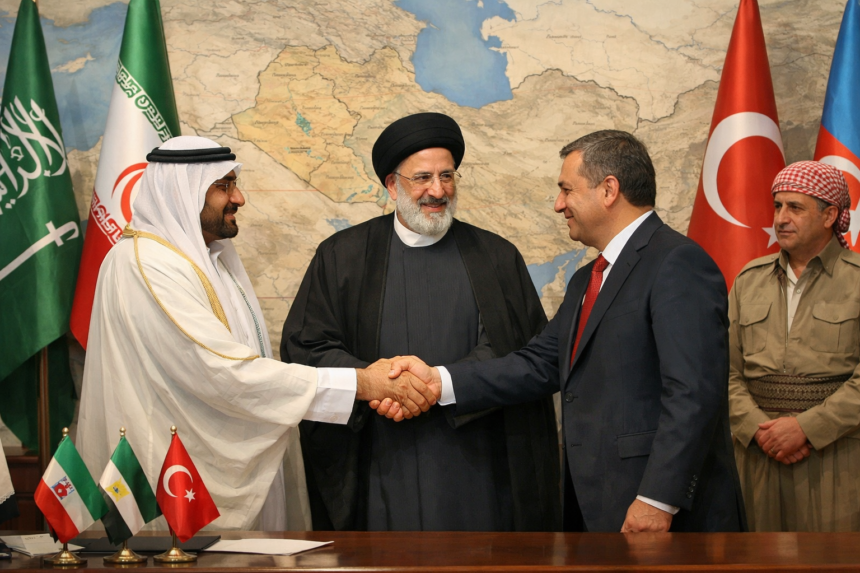
In a historic speech in March 2026, Iran’s president apologized to neighboring countries for attacks that Iran carried out during a time of rising military conflict in the Middle East. Iranian President Masoud Pezeshkian said this apology on state television and on behalf of the government. His comments were part of a big change in policy toward regional states that were affected by Tehran’s military responses after the US and Israel had a lot of fighting. On the same day, Iran made an official statement saying that it would not attack neighboring countries again unless those countries attacked Iran first. Most people saw this move as an effort to stop the conflict from spreading further across West Asia and to find ways to talk to each other during one of the most dangerous standoffs the region has seen in a long time.
- A Brief History: The Path to the Apology
- What Did the President Say?
- Why the apology was made from a strategic point of view
- Responses from around the world and in the region
- What the apology means for security in the area
- Problems and Criticisms
- What happens next? Chances for Peace
- Questions that are often asked (FAQs)
- Conclusion
The next part of the discussion looks at the background, the reasons behind, the effects, the reactions, and the future of the Iranian president’s apology to neighboring countries for attacks. We will find out why this gesture is important, how it might change the situation in the region, and what experts think about the chances of peace in the Middle East.
A Brief History: The Path to the Apology
Before the apology, the Middle East was going through a time of very high military tension. The conflict got worse when the US and Israel worked together to bomb Iranian cities and military infrastructure, killing important leaders in Iran, including Supreme Leader Ayatollah Ali Khamenei. Iran then fired a series of missiles and drones at different targets in the region, including Gulf states like the United Arab Emirates, Bahrain, Qatar, Saudi Arabia, Kuwait, and others. People called these strikes “retaliatory actions.” During these events, Iranian defense forces carried out long-term military operations that spread the conflict beyond Iran’s borders.
As the fighting went on, Iran’s interim leadership council looked for a way to calm things down and reassure its neighbors that Tehran didn’t want to start a bigger war with them. Masoud Pezeshkian gave an unusual and very symbolic apology as president. He admitted that Iran’s military actions hurt neighboring countries and promised to stop attacking them in the future.
What Did the President Say?
President Pezeshkian said on TV, “I’m sorry to the neighboring countries that Iran attacked.” He made this statement in person and on behalf of the country. He also confirmed that Iran would not attack its neighbors unless those countries attacked Iran first. Iran’s interim leadership council agreed on this principle.
The president also made it clear that Iran did not want to fight with its neighbors and that the government would use diplomatic means to calm things down.He aimed to calm foreign governments by explaining that the recent violence did not target them aggressively but occurred as part of a larger conflict involving multiple regional players. He emphasized the need for restraint and expressed a strong desire to prevent the situation from spreading to other areas.
This statement stood out because Iranian leaders rarely publicly acknowledge that their military operations can affect other countries unintentionally. By making this admission, Tehran signaled its interest in adjusting its approach amid ongoing regional instability.
Why the apology was made from a strategic point of view
The Iranian president’s apology was both a gesture and a strategy. There are a few important reasons why this decision was probably made:
1. Stopping the escalation of violence in the region
Iran’s leaders knew that more attacks on neighboring countries could make the conflict worse and bring more countries into direct conflict. Tehran wanted to lower the risk of escalation that could lead to a full-scale regional war by making a formal apology and announcing a new policy that would limit future attacks.
The current hostilities had already made diplomatic relations worse and made people more afraid of widespread instability in the Middle East. The apology showed that they were willing to calm things down, which could have led to more people getting involved in the war.
2. Comfort for the Gulf States
Iranian military actions, including strikes that reportedly hit important urban and economic centers, had unintentionally affected several member states of the Gulf Cooperation Council (GCC). Iran apologized to these governments to show them that it didn’t want to directly confront them and that it respected their sovereignty. This was an important diplomatic move meant to keep future cooperation going and lower hostility.
3. Getting involved in diplomacy
Another reason for the apology was to show that they were willing to look into diplomatic options. Tehran may have been trying to show that it was open to broader peace talks, possibly with the help of outside mediators, while the conflict was still going on. Saying sorry was an important first step in making it possible for people to talk to each other.
Responses from around the world and in the region
Different governments and political analysts had different reactions to the Iranian president’s apology to neighboring countries for attacks. Some leaders in nearby Gulf states saw the gesture as a good thing that could ease fears of more strikes right away.These countries maintain strong economic and strategic ties that a prolonged war could damage.
Other governments in the region responded cautiously. They accepted the apology but emphasized that leaders must follow words with consistent actions. They highlighted that halting further violence and strengthening diplomatic communication channels remains crucial for rebuilding trust after the recent escalation.
International observers noted that the apology could help reduce tensions in the short term, but they warned that achieving lasting peace requires broader agreements addressing the conflict’s root causes, including nuclear negotiations, security arrangements, and foreign military involvement.
Some experts also emphasized that, although the apology carries symbolic importance, ongoing military operations involving the United States and Israel continue to complicate the security situation. They stressed that the apology represents a first step toward reducing regional conflict, but sustained diplomatic efforts must follow to establish real and lasting peace.
What the apology means for security in the area
This apology will probably have effects in a number of ways:
Immediate De-escalation
Iran might be able to stop cross-border attacks from happening more often and with more force by promising not to attack its neighbors again. This could lower the immediate risk of more conflict spilling over and give diplomats and policymakers more time to work things out.
Change in how people see things
This kind of apology can change how people and politicians in nearby countries see things. It might lessen fear and hostility among people who are affected by the conflict and create new opportunities for people to work together to talk about security issues.
Negotiations and diplomatic engagement
The apology could be the start of more in-depth diplomatic talks that involve not only Iran and its neighbors but also major powers and international organizations. Peace talks often start with gestures like apologies that show they understand the damage done and set the stage for talks to settle bigger problems.
Stability of the economy in the region
Less risk for the military could help stabilize important parts of the economy, like trade routes and energy markets. Many Gulf states are important to the world’s energy supply, and increased conflict in the past had people worried about oil exports being stopped and the stability of the global economy.
In general, it’s too soon to say what this apology will mean in the long run, but it shows a move toward restraint and could be a good sign for diplomacy in the region.
Problems and Criticisms
Even though it was important as a symbol, the apology also faced criticism and problems:
Not sure who is in charge of the military
Some experts questioned whether Iran’s civilian leaders truly control all military operations. They pointed out that powerful branches of the Iranian armed forces, especially the Islamic Revolutionary Guard Corps (IRGC), take decisions independently of the elected government. Critics warned that this could make it difficult to enforce the new policy against attacks, since military units might continue operations even if political leadership wants them to stop.
More violence
Reports indicated that Iranian forces continued to launch strikes in Gulf areas even after the president broadcasted his apology on television.This made people doubt how useful the president’s promise would be in real life, suggesting that communication or command execution within the government was behind the political announcement.
Mixed Signals in Diplomacy
The apology was a good diplomatic move toward some neighboring countries, but Tehran kept using military force against other groups involved in the larger conflict, like Israel and the United States. This mixed approach made the story more complicated and made it harder for people to figure out what the apology really meant for peace and stability.
Even though some people didn’t like it, many experts from around the world still thought the apology was a good way to lower one part of the conflict and stop it from getting worse.
What happens next? Chances for Peace
The effect of Iran’s president apologizing to neighboring countries for attacks will depend on continued diplomatic efforts and the actions of everyone involved in the conflict. Some things that could happen are:
Longer diplomatic talks
Countries next to each other, world powers, and international organizations could start or grow diplomatic efforts to establish an official ceasefire and a framework for long-term peace talks.
Guarantees of Safety
Countries in the area may want to make formal agreements that protect their security and territorial integrity in exchange for not escalating military action.
Measures to Build Trust
Iran and its neighbors could do things to build trust, like keeping an eye on each other, making sure that communication is clear, and setting up plans for dealing with crises to cut down on misunderstandings that lead to violence.
Working together on the economy
In addition to security, there is a chance for economic cooperation that helps keep things stable. Governments may choose diplomacy over conflict if they have common interests in trade and energy markets.
We don’t know what will happen next, but Iran’s president’s apology is a big step in the right direction for lowering tensions in one important area of the conflict.
Questions that are often asked (FAQs)
What did the president of Iran say sorry for?
Iran’s President Masoud Pezeshkian said sorry for the military attacks that Iran made on nearby countries while tensions were rising with Israel and the US. He admitted that these strikes had an effect and said that Tehran would not attack neighboring countries in the future unless they attacked Iran first.
What makes this apology important?
The apology is important because it shows that the Iranian government is willing to admit that its actions hurt other countries. It opens the door for diplomacy and could mean that people in the area are becoming more restrained.
Does this mean the fighting is over?
Not always. The apology may stop attacks on neighboring countries, but the bigger conflict between Iran, Israel, and the US goes on. To keep the peace, many people will need to keep talking and working together.
What did the countries next door do after the apology?
People had different reactions. Some of the countries next door saw the gesture as a sign of de-escalation, while others were still cautious and stressed that actions must match words.
What effect might this apology have on the chances of peace?
The apology might help ease tensions and set the stage for future diplomatic talks. It might also lead to more international mediation and communication between regional and global actors to stop more violence.
Conclusion
The apology by Iran’s president marks a significant and historic moment in Middle Eastern diplomacy. By openly acknowledging the harm caused by Iran’s military actions, Iran President apologises to neighbouring countries for attacks, demonstrating a rare willingness to balance national defence with regional responsibility. While the apology alone cannot end the ongoing conflict or guarantee immediate peace, it creates an important foundation for dialogue, trust‑building, and conflict de‑escalation.
This gesture may encourage neighbouring states to engage in diplomatic talks, reduce immediate tensions, and explore agreements on security and stability. At the same time, challenges remain, including the control of military operations, ongoing hostilities with other regional and global actors, and the need for concrete measures to reinforce the sincerity of the apology.