

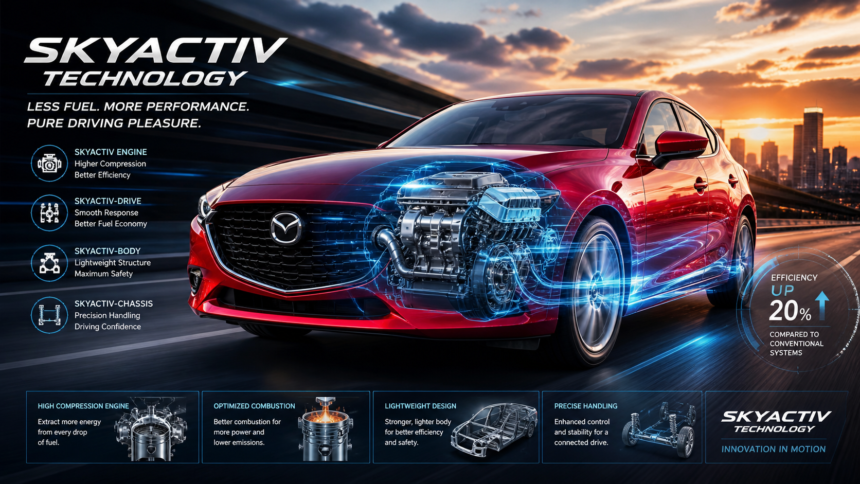
Skyactiv Technology is a group of advanced automotive technologies developed by Mazda to improve fuel efficiency, engine performance, driving comfort, and vehicle safety. Mazda introduced this technology to create cars that deliver strong performance without depending heavily on turbochargers or hybrid systems. The company focused on redesigning every important part of the vehicle instead of changing only the engine. This strategy helped Mazda create lighter, stronger, and more efficient vehicles.
Many people search for “what is Skyactiv Technology” because they want to understand why Mazda vehicles feel different from many competitors. Skyactiv Technology combines engine design, transmission systems, body structure, and chassis engineering into one complete package. Every component works together to improve efficiency and driving quality. Mazda developed this system to deliver a natural driving experience while reducing fuel consumption and emissions.
Skyactiv Technology became popular because it gives drivers a balance between power and fuel economy. Many car manufacturers reduce engine size and add turbochargers to improve efficiency. Mazda followed a different path. The company created high-compression engines that generate more energy from fuel while keeping the driving experience smooth and responsive. This unique engineering philosophy helped Mazda stand out in the automotive market.
The History Behind Skyactiv Technology
Mazda introduced Skyactiv Technology in 2011 after years of research and development. During that period, many governments around the world introduced stricter fuel economy and emission regulations. Car manufacturers needed better solutions to reduce environmental impact without sacrificing performance. Mazda decided to redesign the entire vehicle platform instead of making small improvements to older systems.
The engineers at Mazda believed drivers still wanted enjoyable vehicles with strong acceleration and responsive handling. They wanted to create technology that improved fuel efficiency without removing the excitement of driving. This goal led to the development of Skyactiv engines, transmissions, body structures, and chassis systems.
Mazda also wanted to reduce vehicle weight because lighter cars require less energy to move. The company redesigned body structures using high-strength steel to improve safety while reducing overall weight. This engineering process became one of the most important parts of the Skyactiv concept.
Today, Skyactiv Technology appears in many Mazda models around the world. Drivers appreciate the combination of fuel savings, smooth driving, and reliable performance. The technology continues to evolve as Mazda develops hybrid and electric solutions for future vehicles.
How Skyactiv Engines Work
The engine is the most important part of Skyactiv Technology. Mazda created special gasoline and diesel engines designed to maximize energy efficiency. These engines use advanced engineering methods to improve combustion and reduce fuel waste.Skyactiv gasoline engines use an unusually high compression ratio. Compression ratio refers to how much the engine compresses the air and fuel mixture before ignition. Higher compression creates a more powerful combustion process, which improves efficiency and performance. Most gasoline engines use lower compression ratios because higher levels can cause knocking. Mazda solved this issue using special piston designs, advanced fuel injection systems, and optimized exhaust systems.
The result is an engine that delivers better fuel economy while maintaining smooth power delivery. Drivers experience responsive acceleration and refined performance without needing a large turbocharger.Skyactiv diesel engines follow a different approach. Traditional diesel engines use very high compression ratios, but Mazda lowered the compression ratio to improve fuel efficiency and reduce harmful emissions. This design also helps the engine operate more quietly and smoothly.
Both gasoline and diesel Skyactiv engines focus on reducing internal friction. Lower friction means the engine loses less energy during operation. Mazda engineers redesigned moving components to improve efficiency and durability.
Skyactiv Transmission Technology
Skyactiv Technology also includes advanced transmission systems. Mazda developed Skyactiv-Drive automatic transmissions and Skyactiv-MT manual transmissions to improve driving feel and efficiency.
The Skyactiv-Drive automatic transmission combines features from traditional automatic, continuously variable, and dual-clutch transmissions. This design helps the vehicle shift smoothly while maintaining strong fuel economy. The transmission responds quickly to driver input, which creates a more connected driving experience.Mazda designed the system to reduce energy loss during gear changes. This improvement helps the engine operate more efficiently and improves acceleration response. Drivers often notice smoother shifting and better control compared to older transmission systems.
The Skyactiv-MT manual transmission focuses on short and precise gear changes. Mazda engineers studied sports car transmissions to create a manual gearbox that feels light and responsive. The design reduces weight while improving shift quality.These transmission systems support the main goal of Skyactiv Technology by improving efficiency and maintaining enjoyable driving dynamics.
Skyactiv Body and Chassis Design
Skyactiv Technology does not focus only on engines and transmissions. Mazda redesigned vehicle bodies and chassis systems to improve safety, handling, and fuel economy.Skyactiv body structures use high-strength steel in important areas of the vehicle. This design increases rigidity while reducing overall weight. A lighter body helps improve fuel efficiency because the engine uses less energy to move the vehicle.
The stronger structure also improves crash protection. Mazda engineered the body to absorb and distribute impact energy more effectively during collisions. This design increases passenger safety while maintaining lightweight performance.The Skyactiv chassis improves steering response and ride comfort. Mazda adjusted suspension geometry and structural rigidity to create stable handling. Drivers often describe Mazda vehicles as engaging and responsive because the chassis communicates road conditions clearly.
The combination of lightweight construction and balanced handling creates a more enjoyable driving experience. Mazda designed every component to work together as part of one complete system.
Fuel Efficiency Benefits of Skyactiv Technology
Fuel efficiency remains one of the biggest advantages of Skyactiv Technology. Mazda developed these systems to help drivers reduce fuel costs without sacrificing driving performance.High-compression gasoline engines extract more energy from every drop of fuel. This process improves mileage and reduces carbon emissions. The lightweight body structure also contributes to efficiency because lighter vehicles require less fuel during acceleration and highway driving.
Skyactiv transmissions help engines operate within their most efficient power range. Smooth gear changes reduce wasted energy and improve overall fuel economy. These combined improvements allow Mazda vehicles to compete with many hybrid vehicles in terms of efficiency.Drivers appreciate that they can enjoy strong acceleration and responsive handling while still achieving impressive mileage. This balance represents one of the main reasons Skyactiv Technology became successful.
Performance Advantages of Skyactiv Technology
Many fuel-efficient vehicles feel slow or disconnected from the road. Mazda wanted a different result. The company designed Skyactiv Technology to improve driving enjoyment as well as efficiency.
Skyactiv engines provide linear power delivery. This means acceleration feels smooth and predictable instead of sudden or delayed. Drivers experience better throttle response because the engine reacts quickly to input.The lightweight body structure also improves handling. Reduced weight allows vehicles to change direction more easily and maintain better balance during cornering. Mazda engineers tuned suspension systems carefully to enhance steering feel and ride comfort.
Skyactiv transmissions contribute to the sporty driving experience by delivering quick and precise gear changes. The automatic transmission responds naturally to acceleration, while the manual gearbox offers smooth and accurate shifting.This combination of performance and efficiency gives Mazda vehicles a unique personality in the automotive market.
Skyactiv Technology and Environmental Impact
Environmental concerns continue to influence the automotive industry. Mazda created Skyactiv Technology to reduce emissions and improve fuel economy without relying entirely on electric power.Efficient combustion systems reduce fuel consumption, which lowers carbon dioxide emissions. Skyactiv diesel engines also produce fewer nitrogen oxide emissions compared to older diesel designs.
The lightweight body structure reduces energy demand during driving. Lower vehicle weight improves efficiency in both city and highway conditions. Mazda also focused on reducing manufacturing waste during vehicle production.
Skyactiv Technology demonstrates that traditional internal combustion engines can still achieve significant efficiency improvements through advanced engineering. Mazda continues to refine these systems while expanding hybrid and electric vehicle development.
Difference Between Skyactiv and Traditional Engines
Traditional engines often focus on either performance or fuel economy. Skyactiv Technology aims to balance both qualities in one system.Many older engines use lower compression ratios and heavier components. These designs consume more fuel and produce lower thermal efficiency. Skyactiv engines improve combustion efficiency through high compression ratios and advanced engineering solutions.
Traditional automatic transmissions may lose energy during gear changes. Skyactiv-Drive transmissions reduce energy loss and provide faster response. This improvement enhances both performance and fuel economy.Older vehicle structures often use heavier materials that reduce efficiency. Skyactiv body structures use lightweight high-strength steel to improve rigidity and reduce weight.The overall result is a vehicle that feels more responsive while using less fuel.
Popular Mazda Models with Skyactiv Technology
Many Mazda vehicles use Skyactiv Technology across different markets. Popular models include the Mazda3, Mazda CX-5, Mazda6, and Mazda CX-30.The Mazda3 became especially popular because it combines sporty handling with excellent fuel economy. Drivers appreciate the premium interior quality and smooth performance.
The Mazda CX-5 gained attention in the SUV market because it delivers refined driving dynamics and comfortable ride quality. Many reviewers praise the vehicle for feeling more engaging than competing crossovers.Mazda continues to expand Skyactiv systems across its lineup while introducing new hybrid and electric technologies.
Is Skyactiv Technology Reliable?
Many drivers ask about the reliability of Skyactiv Technology before buying a Mazda vehicle. In general, Skyactiv systems have developed a strong reputation for reliability and durability.Mazda designed these engines with fewer complicated turbocharging systems in many models. This simpler design can reduce maintenance complexity. The engines also use advanced cooling and combustion systems that improve long-term performance.
Regular maintenance remains important for any vehicle. Oil changes, fluid inspections, and scheduled servicing help maintain engine efficiency and reliability. Drivers who follow maintenance recommendations often report excellent long-term ownership experiences.Mazda continues to improve Skyactiv systems through ongoing engineering updates and software refinements.
Future of Skyactiv Technology
Mazda plans to continue developing Skyactiv Technology for future vehicles. The company introduced Skyactiv-X engines, which combine gasoline engine performance with some efficiency benefits of diesel engines.Skyactiv-X uses a special combustion method called Spark Controlled Compression Ignition. This system improves fuel efficiency while maintaining strong performance. Mazda developed this technology to bridge the gap between traditional gasoline engines and future electrified systems.
The company also works on hybrid and electric vehicles that integrate Skyactiv engineering principles. Mazda aims to reduce environmental impact while preserving the enjoyable driving experience that defines the brand.Future versions of Skyactiv Technology may include improved battery systems, advanced driver assistance features, and more efficient powertrains.
Why Drivers Like Skyactiv Technology
Drivers appreciate Skyactiv Technology because it creates a balanced driving experience. Many modern vehicles prioritize efficiency but sacrifice responsiveness and driver engagement. Mazda chose a different direction.Skyactiv vehicles feel connected to the road while remaining practical for daily driving. The engines respond naturally, the steering feels precise, and the chassis maintains stability during cornering.
Fuel economy also remains competitive, which helps drivers save money over time. Many owners enjoy premium driving characteristics without paying luxury vehicle prices.The combination of performance, efficiency, reliability, and comfort explains why Skyactiv Technology continues to attract attention worldwide.
Common Myths About Skyactiv Technology
Some people believe Skyactiv Technology only refers to Mazda engines. In reality, the term includes the entire vehicle system, including transmissions, body structures, and chassis design.Another common myth suggests high-compression engines always require premium fuel. Many Skyactiv gasoline engines operate efficiently using regular fuel in several markets.
Some drivers also assume efficient vehicles cannot provide sporty handling. Mazda proved that lightweight engineering and balanced chassis tuning can deliver enjoyable driving dynamics while maintaining excellent fuel economy.Understanding these facts helps consumers appreciate the full value of Skyactiv Technology.
FAQs
What is Skyactiv Technology in Mazda cars?
Skyactiv Technology is Mazda’s advanced engineering system that improves fuel efficiency, engine performance, safety, and driving comfort through redesigned engines, transmissions, chassis, and body structures.
Does Skyactiv Technology save fuel?
Yes, Skyactiv Technology improves fuel efficiency through high-compression engines, lightweight vehicle structures, and optimized transmission systems.
Is Skyactiv Technology reliable?
Skyactiv Technology has a strong reputation for reliability when owners follow regular maintenance schedules and manufacturer service recommendations.
Which Mazda cars use Skyactiv Technology?
Many Mazda models use Skyactiv Technology, including the Mazda3, Mazda6, CX-5, and CX-30.
What makes Skyactiv engines different?
Skyactiv engines use advanced combustion systems and higher compression ratios to improve fuel efficiency and performance without relying heavily on turbocharging.
Is Skyactiv better than traditional engines?
Skyactiv Technology offers better fuel economy, improved driving response, reduced emissions, and lighter vehicle design compared to many traditional engine systems.
Does Skyactiv Technology include hybrid systems?
Mazda now combines Skyactiv engineering principles with hybrid and electric technologies in newer vehicle developments.
Why is Skyactiv Technology popular?
Drivers like Skyactiv Technology because it balances fuel efficiency, smooth performance, responsive handling, and long-term reliability in one complete package.
Conclusion
Understanding “what is Skyactiv Technology” helps drivers recognize why Mazda vehicles feel unique in the automotive market. Skyactiv Technology represents Mazda’s complete engineering philosophy focused on fuel efficiency, responsive performance, safety, and driving enjoyment.
Instead of relying heavily on downsized turbocharged engines, Mazda redesigned engines, transmissions, body structures, and chassis systems from the ground up. This strategy created vehicles that balance power, efficiency, comfort, and reliability.
Skyactiv Technology continues to evolve as Mazda develops new hybrid and electric solutions for the future. The company remains committed to delivering efficient vehicles that still provide an engaging driving experience.For drivers who want fuel economy without sacrificing performance and comfort, Skyactiv Technology offers a smart and innovative solution.