

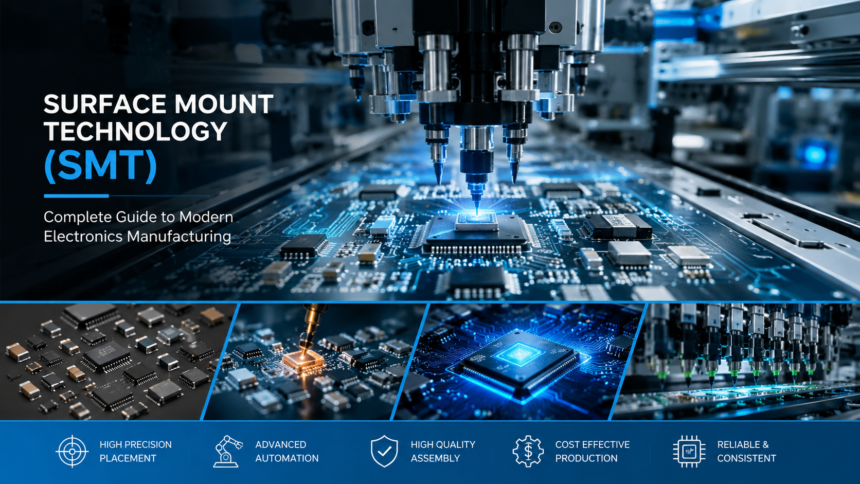
Surface mount technology has changed the electronics manufacturing industry in many ways. Modern electronic devices now use smaller, faster, and more efficient components because of this advanced manufacturing method. From smartphones and laptops to medical equipment and automotive systems, almost every electronic product depends on this technology.
Manufacturers prefer surface mount technology because it improves production speed and product reliability. It also reduces the size of electronic devices while increasing performance. As the demand for compact and smart electronics continues to grow, companies rely on SMT to produce high-quality circuit boards with better precision.
This guide explains everything about surface mount technology in simple words. You will learn how SMT works, its process, benefits, applications, challenges, and future trends. This article also explains why this technology has become essential in modern electronics manufacturing.
What is Surface Mount Technology?
Surface mount technology is a method used to place electronic components directly onto the surface of a printed circuit board. Manufacturers often call this process SMT. Components used in this process are known as surface mount devices or SMDs.
Before SMT became common, manufacturers used through-hole technology. In that method, workers inserted component leads into drilled holes on a circuit board. That process required more space and increased production time. Surface mount technology solved these problems by allowing automated machines to place components directly on the board surface.
This technology supports high-speed manufacturing and allows companies to build compact electronic products. SMT also improves electrical performance because components stay closer together, which reduces signal interference and improves circuit efficiency.Today, surface mount technology plays a major role in electronics manufacturing because it supports automation, reduces production costs, and improves product quality.
History of Surface Mount Technology
The electronics industry introduced surface mount technology during the 1960s. However, manufacturers started using it widely in the 1980s. During that period, electronic companies needed smaller and lighter devices. Traditional assembly methods could not meet those demands.SMT helped manufacturers produce compact products with higher component density. Companies quickly adopted this technology because it improved production efficiency and reduced manual labor.
As automation technology improved, SMT machines became faster and more accurate. Today, advanced SMT production lines can place thousands of components every hour with excellent precision.The growth of consumer electronics, telecommunications, and automotive industries also increased the demand for SMT manufacturing solutions worldwide.
How Surface Mount Technology Works
The SMT process involves placing electronic components onto a printed circuit board through automated equipment. Manufacturers follow several important steps to complete this process successfully.First, technicians apply solder paste to the circuit board using a stencil printer. Thesolder paste helps connect the components to the board during heating.Next, pick-and-place machines position electronic components accurately on the board surface. These machines work with high precision and speed.
After component placement, the board moves into a reflow oven. The oven heats the solder paste until it melts and creates strong electrical connections between the components and the board.Finally, inspection systems check the board for defects or placement errors. Manufacturers often use automated optical inspection systems to ensure product quality.This complete process allows companies to manufacture reliable electronic products quickly and efficiently.
Main Components Used in SMT
Surface mount technology uses many types of electronic components. Each component performs a specific function in the circuit.Resistors control electrical current within the circuit. Capacitors store electrical energy and stabilize voltage levels. Diodes control current direction, while transistors amplify signals or switch electronic functions.
Integrated circuits are also important in SMT manufacturing. These components contain complex electronic functions within a small package. Modern smartphones, computers, and industrial systems rely heavily on integrated circuits.Connectors, sensors, and inductors also play important roles in SMT assemblies. Manufacturers choose component types based on product requirements and circuit design.
SMT Assembly Process
Solder Paste Printing
Solder paste printing is the first step in the SMT assembly process. Manufacturers use a stencil to apply solder paste onto specific areas of the printed circuit board.This step requires accuracy because uneven solder paste can create connection problems later in the process. Modern stencil printers ensure consistent paste application and improve manufacturing quality.
Component Placement
After solder paste application, automated pick-and-place machines position components on the board. These machines use vacuum nozzles to pick components and place them accurately.Advanced SMT machines can place thousands of components every minute. Their speed and precision make large-scale electronics manufacturing possible.
Reflow Soldering
The reflow soldering stage heats the board inside a controlled oven. The heat melts the solder paste and creates electrical connections between components and the circuit board.The oven follows a temperature profile to prevent component damage and ensure strong solder joints.
Inspection and Testing
Inspection systems examine the completed board for errors or defects. Automated optical inspection systems detect missing components, alignment issues, or poor solder connections.Manufacturers also perform electrical testing to verify circuit functionality before final product assembly.
Benefits of Surface Mount Technology
Surface mount technology offers many advantages for electronics manufacturers. One major benefit is smaller product size. SMT components occupy less space, which allows manufacturers to build compact electronic devices.Production speed also improves with SMT. Automated machines complete assembly tasks much faster than manual methods. This efficiency reduces manufacturing costs and increases production capacity.
Another benefit is improved electrical performance. Shorter electrical paths reduce signal loss and improve circuit reliability.Surface mount technology also supports double-sided board assembly. Manufacturers can place components on both sides of the circuit board, which increases design flexibility.The reduced need for drilled holes lowers material costs and improves board strength. This advantage makes SMT ideal for modern high-density electronics manufacturing.
Applications of Surface Mount Technology
Surface mount technology supports many industries worldwide. Consumer electronics companies use SMT to manufacture smartphones, tablets, laptops, gaming consoles, and smart devices.The automotive industry also depends on SMT for vehicle electronics. Modern cars contain advanced control systems, sensors, navigation units, and safety features that require reliable circuit boards.
Medical equipment manufacturers use SMT in diagnostic machines, monitoring systems, and wearable medical devices. Compact circuit designs improve portability and device performance.
Telecommunication companies rely on SMT for networking equipment, communication devices, and wireless systems. Aerospace and defense industries also use SMT because of its reliability and precision.Industrial automation systems, robotics, and renewable energy products also depend on SMT-based electronics.
Difference Between SMT and Through-Hole Technology
Surface mount technology and through-hole technology both support electronics manufacturing, but they work differently.Through-hole technology requires manufacturers to drill holes into the circuit board and insert component leads manually or automatically. This process takes more space and time.In contrast, SMT places components directly onto the board surface without drilling holes. This method improves manufacturing speed and supports compact designs.
Through-hole technology offers stronger mechanical connections, which makes it suitable for heavy components or high-stress environments. However, SMT provides better production efficiency and supports miniaturization.Many modern products combine both technologies to achieve the best performance and reliability.
SMT Machines and Equipment
SMT production lines use advanced machines to improve manufacturing quality and efficiency.Stencil printers apply solder paste accurately on the board surface. Pick-and-place machines position components quickly and precisely.Reflow ovens create strong solder connections through controlled heating cycles. Inspection systems verify assembly quality and identify manufacturing defects.
Conveyor systems move boards between different production stages automatically. Software systems also monitor production performance and machine accuracy.Modern SMT factories invest heavily in automation because it increases productivity and reduces manufacturing errors.
Importance of SMT in Modern Electronics
Modern electronic devices continue becoming smaller and more powerful. Surface mount technology supports this trend by enabling compact circuit designs with high component density.Without SMT, manufacturers could not produce lightweight smartphones, wearable devices, advanced medical equipment, or smart home products efficiently.
SMT also improves manufacturing scalability. Companies can produce millions of electronic products with consistent quality using automated SMT systems.As technology advances, the importance of SMT will continue growing across industries worldwide.
Common Challenges in SMT Manufacturing
Although SMT offers many advantages, manufacturers also face several challenges.Component placement accuracy remains critical because even small alignment errors can affect circuit performance. Manufacturers must maintain precise machine calibration to avoid defects.Soldering defects such as bridging, tombstoning, or insufficient solder can also occur during assembly. Quality control systems help reduce these problems.
Miniaturized components create additional manufacturing difficulties because smaller parts require more accurate placement and inspection systems.Environmental conditions such as humidity and temperature also affect solder quality and component performance.Manufacturers solve these challenges through advanced automation, employee training, and strict quality control procedures.
SMT Quality Control
Quality control plays an important role in SMT manufacturing. Manufacturers use inspection systems throughout the production process to maintain product reliability.Automated optical inspection systems check component alignment, solder quality, and placement accuracy. X-ray inspection systems help examine hidden solder joints beneath complex components.Functional testing verifies that the completed board operates correctly under real conditions.
Manufacturers also follow international quality standards to ensure consistent production performance. Strong quality control improves customer satisfaction and reduces product failures.
Future of Surface Mount Technology
The future of surface mount technology looks very promising. Electronics manufacturers continue developing smaller and smarter products, which increases demand for advanced SMT solutions.Artificial intelligence and machine learning now improve SMT production efficiency. Smart manufacturing systems can detect defects automatically and optimize production processes in real time.
The growth of electric vehicles, 5G networks, wearable devices, and Internet of Things technology will also increase SMT adoption worldwide.Advanced robotics and automation systems will continue improving production accuracy and reducing manufacturing costs.As technology evolves, surface mount technology will remain a key part of modern electronics manufacturing.
Why Businesses Choose SMT Services
Many companies choose professional SMT service providers because they offer advanced manufacturing capabilities and experienced engineering support.Professional SMT companies use modern equipment and quality control systems to produce reliable electronic assemblies. They also help businesses reduce production costs and shorten product development time.
Outsourcing SMT manufacturing allows companies to focus on product design, marketing, and business growth while experienced manufacturers handle assembly operations.Reliable SMT service providers also support prototype development, large-scale production, and custom electronic manufacturing projects.
Choosing the Right SMT Manufacturing Partner
Selecting the right SMT manufacturing partner is important for product success. Businesses should evaluate manufacturing experience, production capacity, quality standards, and technical expertise before choosing a provider.A reliable SMT company should offer advanced equipment, strict quality control, and strong customer support. Fast turnaround times and flexible production options also improve manufacturing efficiency.
Companies should also review certifications and previous project experience to ensure product reliability and manufacturing quality.Working with an experienced SMT partner helps businesses achieve better production performance and long-term success.
Environmental Benefits of SMT
Surface mount technology also supports environmentally friendly manufacturing practices. SMT reduces material waste because it requires fewer drilled holes and smaller components.Automated production systems also reduce energy consumption compared to traditional assembly methods.
Lead-free soldering processes now help manufacturers meet environmental regulations and improve workplace safety.Compact electronic designs reduce raw material usage and support sustainable manufacturing practices across industries.
FAQs
What is surface mount technology used for?
Surface mount technology is used to assemble electronic components directly onto printed circuit boards. Manufacturers use it in smartphones, computers, medical devices, automotive systems, and industrial electronics.
What are the advantages of SMT?
SMT offers smaller product size, faster manufacturing, improved electrical performance, reduced production costs, and higher component density.
What is the difference between SMT and SMD?
SMT refers to the manufacturing process, while SMD refers to the electronic components used in that process.
Why is SMT important in electronics manufacturing?
SMT supports compact designs, automation, faster production, and reliable circuit performance, which makes it essential for modern electronics manufacturing.
Which industries use surface mount technology?
Consumer electronics, automotive, aerospace, telecommunications, medical equipment, and industrial automation industries use SMT extensively.
Is surface mount technology better than through-hole technology?
SMT offers better production speed and compact design advantages, while through-hole technology provides stronger mechanical connections. Many manufacturers use both methods together depending on product requirements.
What machines are used in SMT manufacturing?
SMT production lines use stencil printers, pick-and-place machines, reflow ovens, inspection systems, and automated testing equipment.
What is the future of surface mount technology?
The future of SMT includes advanced automation, artificial intelligence integration, smaller electronic components, and increased demand from smart devices and electric vehicles.
Conclusion
Surface mount technology has transformed the electronics manufacturing industry by improving production speed, product quality, and design flexibility. Modern electronic devices rely heavily on SMT because it supports compact designs and efficient manufacturing processes.From consumer electronics and automotive systems to medical devices and industrial automation, SMT continues driving innovation across industries worldwide.
Businesses choose surface mount technology because it reduces manufacturing costs, improves reliability, and supports large-scale production. As electronic technology continues evolving, SMT will remain one of the most important manufacturing methods in the global electronics industry.Companies that invest in advanced SMT solutions can improve product performance, increase production efficiency, and stay competitive in the rapidly growing electronics market.