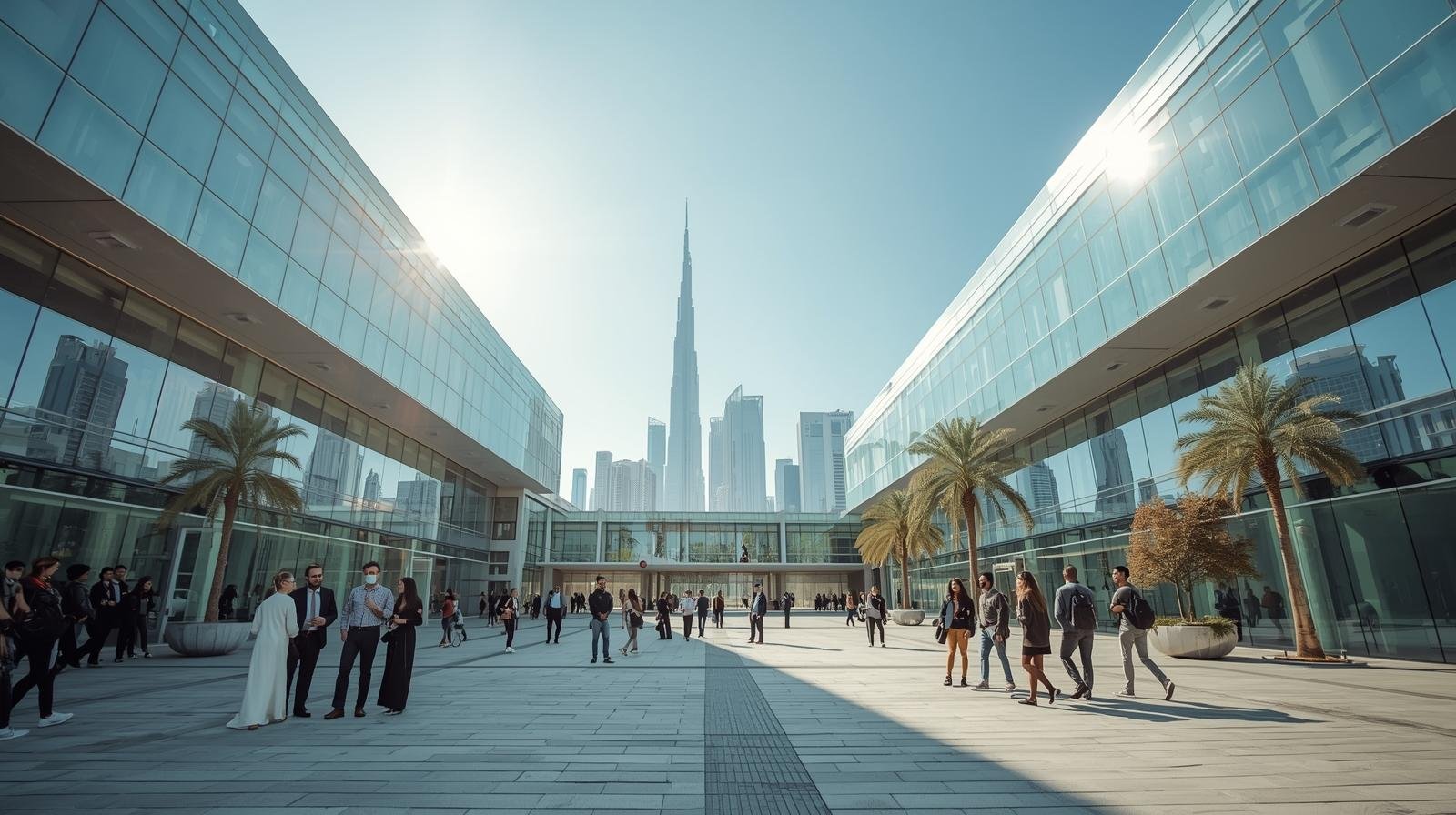

Dubai often gets a reputation as a city built for cars, with wide highways and sprawling communities. But that picture only tells half the story. Over the past decade, Dubai has developed one of the most efficient metro systems in the region, and an increasing number of residents now opt for Dubai Metro neighborhoods as a car-free alternative, avoiding traffic, parking fees, and fuel costs.
- Why More People Are Choosing Car-Free Living in Dubai
- What Makes a Neighborhood Truly Metro-Friendly
- Best Areas to Live Near Dubai Metro
- What’s Included in a Truly Walkable Metro Neighborhood
- Renting Without a Car: What to Check Before You Sign
- Getting Around Beyond the Metro: Buses, Taxis, and Ride-Hailing
- Daily Amenities Near Dubai Metro: What You Can Expect
- Understanding Dubai Metro Commuting
- Signs You’ve Chosen the Right Metro Neighborhood
- Common Mistakes to Avoid When Choosing a Metro Neighborhood
- Cost of Living Near Dubai Metro: What to Budget For
- Choosing the Right Dubai Metro Neighborhood for Your Lifestyle
- Frequently Asked Questions
- Conclusion
If you’re tired of sitting in Sheikh Zayed Road traffic or paying for a parking spot you barely use, this guide shows you exactly where to live, what to expect from rent, how commuting works, and which areas give you everything you need within walking distance of a station.
Why More People Are Choosing Car-Free Living in Dubai
Living without a car in Dubai isn’t just possible anymore — it’s genuinely practical. The Dubai Metro connects major business districts, residential communities, and entertainment hubs through the Red Line and Green Line, and both lines run frequently enough that you rarely wait long for a train.
People choose car-free living in Dubai for financial and lifestyle reasons. Car ownership brings real costs: fuel, insurance, Salik toll charges, parking fees, and maintenance all add up fast. Skip the car, and that money goes straight back into your pocket or toward better housing.
There’s also the daily stress factor. Anyone who drives through Dubai during rush hour knows the frustration of bumper-to-bumper traffic near Business Bay or Downtown Dubai. The metro removes that stress entirely. You board a train, sit down, and arrive on schedule — no delays caused by accidents or road closures.
Beyond convenience, Dubai Metro neighborhoods for car-free living tend to be more walkable by design. Developers built many of these communities specifically around metro accessibility, so grocery stores, restaurants, gyms, and clinics sit within a short walk instead of a mandatory drive.
What Makes a Neighborhood Truly Metro-Friendly
Not every area near a station qualifies as genuinely walkable. Some buildings sit close to a metro stop on a map but require crossing a busy highway or walking through an unshaded stretch to reach it. A real Dubai Metro-friendly neighborhood checks a few specific boxes.
Walking Distance That Actually Works
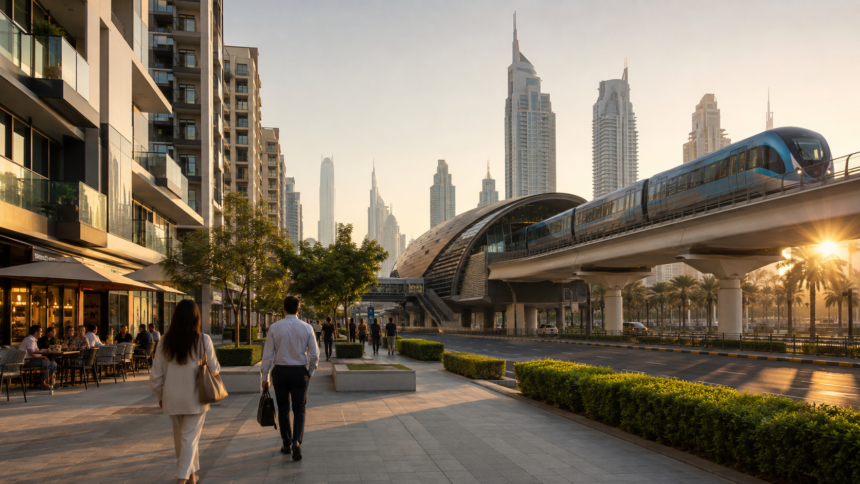
The best neighborhoods place residential towers within a 5 to 10-minute walk of the station entrance, connected by covered walkways or pedestrian bridges. Dubai’s heat makes this detail matter far more than it would in a cooler city.
Daily Essentials Within Reach
A strong metro-friendly community includes supermarkets, pharmacies, cafes, and basic services close to home. You shouldn’t need a taxi just to buy groceries.
Reliable Last-Mile Options
Even in a walkable neighborhood, you’ll sometimes need to travel further than comfortable walking distance allows. Areas with easy access to the RTA bus network, taxis, or ride-hailing apps close that gap easily.
Best Areas to Live Near Dubai Metro
Let’s get into specifics. These neighborhoods consistently come up when people search for the best areas to live near Dubai Metro, based on rent, walkability, and access to daily needs.
Dubai Marina
Dubai Marina remains one of the most popular Dubai Metro neighborhoods for car-free living, and it’s easy to see why. The Dubai Marina Metro Station connects directly to the Dubai Tram, which loops through the entire waterfront community. That means you can reach almost any building without ever needing a car.
Rent here runs on the higher side. A studio typically starts around AED 55,000 to 70,000 per year, while a one-bedroom apartment ranges from AED 75,000 to 100,000 annually. You pay a premium for the marina views and lifestyle, but you also get supermarkets, restaurants, gyms, and clinics packed within walking distance.
Commute times from Dubai Marina to Downtown Dubai average around 30 to 35 minutes by metro, and reaching Dubai Media City or Internet City takes closer to 10 minutes. That makes it ideal for professionals working in those business hubs.
Jumeirah Lakes Towers (JLT)
Jumeirah Lakes Towers sits right next to Dubai Marina and offers a more affordable alternative while still delivering excellent metro accessibility. The JLT Metro Station serves the community directly, and the area’s cluster layout puts most towers a short walk from a station entrance.
Rent for a studio in JLT typically falls between AED 45,000 and 60,000 per year, with one-bedroom apartments ranging from AED 60,000 to 85,000. This makes JLT one of the more affordable areas near Dubai Metro without sacrificing lifestyle or convenience.
The neighborhood also has a strong walkable core, with grocery stores, cafes, parks, and pet-friendly spaces scattered throughout the towers. Commuting to Downtown Dubai takes roughly 25 to 30 minutes, and reaching the Marina takes just a few minutes.
Downtown Dubai
If you want to be at the center of everything, Downtown Dubai delivers unmatched access to the Burj Khalifa/Dubai Mall Metro Station. This busy, well-connected Red Line station puts you within walking distance of Dubai Mall, countless restaurants, and major office towers.
Rent in Downtown Dubai sits at the higher end of the market. A studio averages AED 65,000 to 85,000 per year, while one-bedroom apartments often exceed AED 100,000 to 130,000 annually. You pay for a prime location and top-tier amenities, but for many professionals, the time saved on commuting justifies the cost.
Commute times from Downtown to Business Bay take just 5 to 8 minutes, and reaching DIFC takes around 10 minutes. That makes this one of the most convenient Dubai Metro neighborhoods for anyone working in the city’s financial or business core.
Deira and Al Rigga
For budget-conscious renters, Deira and the surrounding Al Rigga area offer some of the most affordable rent near Metro stations in the entire city. This older, more traditional part of Dubai has a dense network of shops, restaurants, and services, all easy to reach on foot.
Studios in Al Rigga typically rent for AED 25,000 to 35,000 per year, while one-bedroom apartments range from AED 35,000 to 50,000. That’s a big discount compared to Marina or Downtown pricing, which makes this area popular with young professionals and families watching their budget.
The Al Rigga and Union Metro Stations connect directly to both the Red and Green Lines, giving residents fast access across the city. A commute to Downtown Dubai takes around 20 minutes, while reaching Deira City Centre takes just a few stops.
Al Karama
Al Karama sits close to the Dubai Metro Green Line and offers another budget-friendly option with a strong community feel. It’s known for affordable dining, local markets, and a genuine neighborhood atmosphere that’s harder to find in newer developments.
Rent for a studio in Al Karama averages AED 28,000 to 38,000 per year, with one-bedroom units ranging from AED 38,000 to 55,000. The ADCB Metro Station and Al Karama Metro Station both serve the area, putting most residents within a comfortable walk of a station.
Commuting from Al Karama to Downtown Dubai or Business Bay takes roughly 15 to 20 minutes, making it a practical choice for people working in central Dubai without the Downtown price tag.
Al Nahda
Al Nahda, located near the Dubai-Sharjah border, is a favorite among residents who want lower rent while staying connected to the metro network. The area benefits from proximity to Stadium Metro Station and offers a wide range of housing options.
Studios here rent for around AED 22,000 to 32,000 per year, while one-bedroom apartments range from AED 32,000 to 45,000. That makes it one of the more affordable pockets among Dubai neighborhoods near Metro stations.
Commute times to Downtown Dubai from this area take around 25 to 30 minutes, a fair trade-off for the savings on rent.
What’s Included in a Truly Walkable Metro Neighborhood
When you evaluate pedestrian-friendly areas in Dubai, look beyond just the presence of a nearby station. These features separate a genuinely convenient neighborhood from one that only looks good on paper:
- Covered or shaded walkways connecting residential buildings to the station entrance, which matters enormously during Dubai’s hot summer months
- Supermarkets and pharmacies within a 5 to 10-minute walk, so daily errands don’t require transport
- Multiple dining options, from casual cafes to full restaurants, spread across the community rather than concentrated in one spot
- Parks or green spaces that make the neighborhood pleasant to walk through, not just functional
- Bus feeder routes connecting the metro station to areas slightly outside comfortable walking range
- Well-lit streets and sidewalks for safe evening walks after work or dinner
- Nearby healthcare clinics so you’re not stuck relying on a taxi for minor medical needs
Renting Without a Car: What to Check Before You Sign
Signing a lease in a metro-friendly building takes more effort than a quick online search. Visit the property at different times of day, and check the walking route to the station yourself before you commit.
Ask the landlord or agent a few direct questions. Find out how far the nearest supermarket sits, whether the walkway to the station has shade, and how many minutes the walk actually takes during peak summer heat. Photos and listings often skip these details, so a personal visit protects you from surprises after move-in.
Also check the building’s parking policy. Many towers in Dubai Metro neighborhoods for car-free living charge extra for a parking spot you may never use, so ask if you can skip that fee entirely if you don’t own a car.
Getting Around Beyond the Metro: Buses, Taxis, and Ride-Hailing
The metro covers most of your daily travel, but no single system handles every trip. Dubai’s RTA bus network fills the gaps, connecting metro stations to areas slightly outside walking range, including many residential streets and smaller communities.
Taxis and ride-hailing apps like Careem and Uber cover the rest. Both work well for late-night trips, grocery runs with heavy bags, or short distances that don’t justify a full metro trip. Prices stay reasonable for short rides, especially when you split the cost with a roommate or partner.
Combining these options with the metro gives you full flexibility without ever needing your own car. Most residents in Dubai Metro neighborhoods for car-free living rely on this exact mix: metro for the daily commute, buses for short local trips, and taxis for late nights or heavy shopping.
Daily Amenities Near Dubai Metro: What You Can Expect
One of the biggest questions people ask before committing to car-free living in Dubai is whether they’ll actually have access to everyday essentials. The good news is that most established Dubai Metro neighborhoods have grown into fully self-sufficient communities.
Grocery Stores Near Dubai Metro
Nearly every metro-adjacent neighborhood has at least one major supermarket chain, whether it’s Carrefour, Spinneys, or Choithrams, along with smaller convenience stores for quick top-ups. In areas like JLT and Al Karama, you’ll often find a supermarket within a five-minute walk of your building.
Schools Near Dubai Metro
Families considering car-free living should know that several reputable schools sit within reasonable distance of metro-connected communities, particularly around Al Barsha, Al Nahda, and parts of Deira. School runs may still need transport for younger children, but older students can often use the metro independently, which adds convenience for busy parents.
Restaurants Near Dubai Metro Stations
Dining options near metro stations range from budget-friendly local eateries to upscale restaurants, especially in areas like Downtown Dubai and Dubai Marina. Deira and Al Karama offer some of the best value for authentic, affordable meals within walking distance of a station.
Understanding Dubai Metro Commuting
Dubai Metro commuting works on a straightforward system built around two main lines. The Red Line runs along Sheikh Zayed Road, connecting the airport, Downtown Dubai, Business Bay, Dubai Marina, and JLT. The Green Line loops through older, more central parts of the city, including Deira, Al Karama, and Al Rigga.
Trains run every few minutes during peak hours, and the entire system runs on a Nol card, which you simply tap in and out at each station. The fare depends on how many zones you cross, and a typical trip across two or three zones costs just a few dirhams.
Dubai Metro Red Line Neighborhoods
The Red Line covers most of the city’s business and lifestyle hubs, making it the more popular choice for professionals. Dubai Marina, JLT, Downtown Dubai, and Business Bay all sit along this line, offering fast, direct access to major employment centers.
Dubai Metro Green Line Neighborhoods
The Green Line serves older, more established communities like Deira, Al Karama, and Al Fahidi. These neighborhoods tend to offer lower rent and a more local, authentic feel, which appeals to residents who prioritize affordability over waterfront views.
Signs You’ve Chosen the Right Metro Neighborhood
Before you sign a lease, confirm the area genuinely supports car-free living rather than just sitting near a station. Watch for these signs:
- You can reach the metro station on foot in under 10 minutes without crossing a major highway
- At least one supermarket sits within comfortable walking distance
- The area has multiple dining options, not just one or two restaurants
- Sidewalks stay shaded, paved, and well-maintained
- Bus routes or taxi stands serve trips slightly outside walking range
- The building or community has a track record of tenants who don’t own cars
Common Mistakes to Avoid When Choosing a Metro Neighborhood
Many renters make the same mistakes when they search for Dubai Metro neighborhoods for car-free living. Knowing these traps in advance saves you time and money.
First, don’t trust a map distance without checking it in person. A building that looks close to a station on Google Maps might actually require a long detour around a highway or construction site. Always walk the route yourself before you sign anything.
Second, don’t ignore the summer heat factor. A route that feels fine in December can feel unbearable in July without shade. Check for covered walkways, not just short distances.
Third, don’t skip the last-mile check. Even a great metro-connected neighborhood needs backup options like buses or taxis for trips outside the station’s immediate radius. Confirm those options exist before you commit to a lease.
Cost of Living Near Dubai Metro: What to Budget For
Beyond rent, living near Dubai Metro genuinely reduces your monthly expenses. Without a car, you skip fuel costs, Salik charges, parking fees, and vehicle insurance, which together can easily add up to AED 2,000 or more per month depending on your driving habits.
Instead, a monthly Nol card pass costs a small fraction of that amount, even with frequent daily travel. For someone commuting five days a week between JLT and Downtown Dubai, the metro stays dramatically cheaper than owning and maintaining a car, even before you factor in the time saved from avoiding traffic.
This cost difference explains why more residents actively search for Dubai neighborhoods near Metro stations before signing a new lease. The savings on transport often offset the slightly higher rent charged in prime metro-adjacent buildings.
Choosing the Right Dubai Metro Neighborhood for Your Lifestyle
The right choice ultimately depends on your budget, work location, and lifestyle preferences. If you want a premium waterfront lifestyle and don’t mind paying more, Dubai Marina or Downtown Dubai deliver unmatched convenience. If affordability matters more, JLT, Al Karama, or Deira offer excellent value without sacrificing metro accessibility.
Families may lean toward areas with nearby schools and quieter streets, while young professionals often prioritize proximity to nightlife, dining, and short commute times to business districts. Whatever your priority, Dubai’s metro network now makes car-free living a realistic option across a wide range of budgets, not just a lifestyle reserved for luxury towers.
Ultimately, choosing among Dubai Metro neighborhoods for car-free living comes down to matching your daily routine with a community built to support it. Take the time to visit a neighborhood at different times of day, walk the route to the station yourself, and check that daily essentials really sit as close as they appear on a map.
Frequently Asked Questions
1. What are the best Dubai Metro neighborhoods for car-free living?
Dubai Marina, JLT, Downtown Dubai, Al Karama, and Deira consistently rank among the top choices. They offer a strong mix of walkability, daily amenities, and direct metro access.
2. How much does rent cost near Dubai Metro stations?
Rent varies widely by area. Budget-friendly neighborhoods like Al Nahda and Deira start around AED 22,000 to 35,000 per year for a studio, while premium areas like Downtown Dubai and Dubai Marina can exceed AED 65,000 annually.
3. Is it realistic to live in Dubai without a car?
Yes, especially if you choose a neighborhood along the Red Line or Green Line with grocery stores, restaurants, and clinics within walking distance. Many residents combine metro travel with occasional taxis for full flexibility.
4. Which metro line works better for commuting to work in Dubai?
The Red Line generally suits professionals working in Downtown Dubai, Business Bay, or the Marina, while the Green Line works well for those based in Deira or older central areas of the city.
5. Are there affordable areas near Dubai Metro for families?
Yes, areas like Al Nahda and Al Karama offer lower rent along with access to schools and family-friendly amenities. Both make practical choices for families who want to reduce transport costs.
Conclusion
Car-free living in Dubai isn’t a compromise anymore — it’s a smart lifestyle choice that saves money, cuts stress, and still gives you easy access to everything you need. From the waterfront convenience of Dubai Marina to the budget-friendly streets of Al Karama and Deira, Dubai Metro neighborhoods for car-free living now cover almost every budget and lifestyle.
The key is to look past the map and check the details yourself: walk the route to the station, confirm the shade and safety of the sidewalks, and make sure supermarkets, clinics, and restaurants sit within easy reach. Get those details right, and you’ll find that skipping the car doesn’t limit your life in Dubai — it actually makes daily life simpler, cheaper, and far less stressful.