
London doesn’t really ask for your attention; it just assumes it already has it. And fair enough, because few cities pull off “ancient and cutting-edge at once” quite like this one does. That contrast is basically why millions of people build an entire holiday around this single city. Maybe you’re after royal history, maybe it’s the food, maybe you just want that one photo next to a red phone box. Whatever the reason, this guide walks you through what actually matters before you go.
- Why London Deserves a Spot on Your Travel List
- Traveling to London for the First Time
- Where to Stay in London
- Top Things to Do in London, England
- Hidden and Quirky Things to Do in London for Adults
- Exploring London’s Neighbourhoods
- Shopping in London
- Day Trips Worth Taking from London
- London Travel Tips for a Smoother Trip
- Once-in-a-Lifetime Experiences in London
- Food and Culture Worth Experiencing
- Sample Three-Day London Itinerary
- Frequently Asked Questions
- Conclusion
We’ll get into the big landmarks, obviously. But also the quieter corners most guides skip past, the practical bits that save you hassle, and some honest thoughts on where to stay depending on your budget. By the end you should have a real framework for building your own trip, not just a list to tick off.
Why London Deserves a Spot on Your Travel List
London sits at a strange, almost contradictory crossroads. It’s the capital of England, sure, but it’s also this sprawling, genuinely global city with over 300 languages spoken across it, where every neighbourhood feels like its own little country. One afternoon you’re wandering through a medieval abbey. That same evening you’re eating incredible Sri Lankan food in a converted warehouse in Peckham. It’s a bit disorienting, honestly, in the best way.
This is what makes London hard to summarise in a single paragraph. It rewards people who wander off-plan and punishes people who try to rush it. History buffs, nightlife chasers, or someone who just wants a good cup of tea and a bench in the park there’s genuinely something here for all of them.
Every borough has its own personality too. Westminster feels formal, almost stiff. Shoreditch feels scrappy and a bit chaotic. Notting Hill looks like it was built for postcards. That variety is exactly why one visit rarely feels like enough — most people who come once end up coming back.
Traveling to London for the First Time
If it’s your first time, take a breath first. London can feel like a lot at the start, mostly because of how big it is, but it settles once a few basics click into place.
Best Time to Visit London
Late spring May into June and early autumn tend to hit the sweet spot: decent weather, crowds that are manageable rather than miserable, and hotel prices that haven’t fully spiked yet. Summer’s gorgeous but packed and pricey. Winter has its own pull too, especially around Christmas, though pack a proper coat and keep expectations for sunshine low.
Entry Requirements and the Practical Stuff
Depending where you’re travelling from, you might need a visa or an Electronic Travel Authorisation before you fly, so it’s worth checking the official UK government site well in advance rather than assuming. Currency is the British Pound. Contactless works nearly everywhere here, including on the buses and Tube, which honestly makes life a lot easier.
Getting Around the City
Once it clicks, London’s transport system genuinely makes exploring easy. A few basics:
- The Underground (the Tube): Fast, frequent, the whole city runs on it. Tap in and out with contactless or an Oyster card.
- Buses: Slower, but you actually see the city instead of staring at tunnel walls.
- Black cabs and rideshare apps: Handy, pricier, best saved for late nights or when you’re hauling luggage.
For first-timers, the easiest move is just tapping a contactless bank card at the barriers. Don’t overthink the fare system it caps itself automatically once you’ve paid enough in a day.
Understanding the Zone System
Fares run on zones, from Zone 1 in the centre out to Zone 9 at the edges. Most of what you’ll actually want to see sits in Zones 1 and 2, so unless you’re staying further out, the outer zones barely matter. And as I mentioned, daily fares cap themselves — you won’t get charged more than a set amount no matter how much you’re darting around.
Where to Stay in London
Where you base yourself shapes the whole trip more than people expect. London’s huge, and picking the wrong spot can quietly cost you an hour of commuting a day without you even realising it until day three.
Central London (Covent Garden, Soho, Westminster)
Prime territory for first-timers — walkable to most major sights, theatres, restaurants. You pay for that convenience, though.
South Bank and Southwark
A good middle ground, honestly. River views, easy reach of Borough Market and the Tate Modern, and typically better value than staying in the West End itself.
Notting Hill and Kensington
Quieter, leafy, a bit more charming than central. Good for couples or anyone who wants a slower pace but still wants to be near the museums.
Shoreditch and East London
This is where younger travellers tend to land nightlife, street art, and a rougher creative energy than the polished centre.
If a once-in-a-lifetime splurge is on the cards, one or two nights in a heritage hotel near Mayfair or The Strand can genuinely lift the whole trip, even if the rest of your stay is budget.
Top Things to Do in London, England
Now the part everyone’s actually here for. There’s no shortage of places worth seeing, but a handful have earned their reputation fairly.
Royal and Historic Landmarks
The Tower of London and Tower Bridge sit right along the Thames, and between the Crown Jewels and centuries of grim royal history, it’s a proper half-day out. Buckingham Palace draws crowds too, especially for the Changing of the Guard — though the ceremony itself runs only about 45 minutes, so time it right.
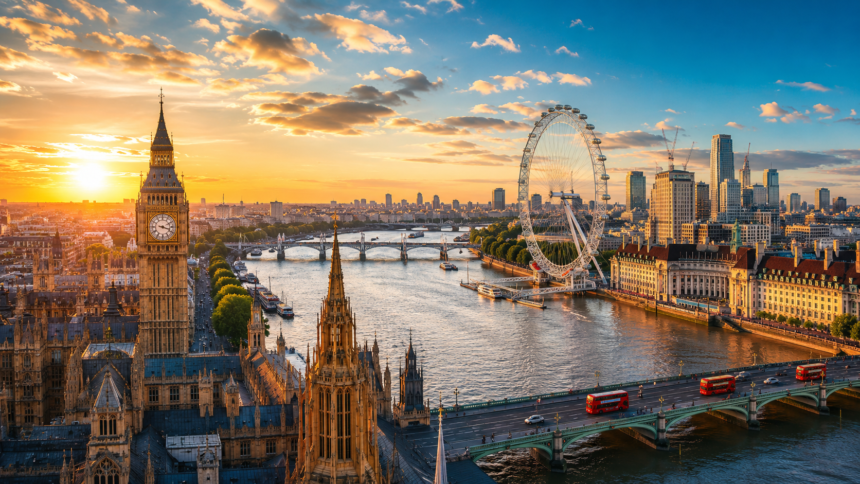
Westminster Abbey and the Houses of Parliament, with Big Ben looming over them, form the political and ceremonial core of the country. And the London Eye, just nearby, gives you a proper skyline view; sunset’s the best time to go up, if you can swing it.
Museums and Galleries
The British Museum and National Gallery are both free, which still surprises people, and their collections hold up against anything in Paris or Rome. Tate Modern, sitting in a former power station, draws the contemporary art crowd. And if you’ve got kids along, the Natural History Museum’s cathedral-like interior tends to win everyone over.
Best Green Spaces in London
- Hyde Park: great for a picnic, a slow row on the Serpentine, or just watching people go by.
- Regent’s Park: home to London Zoo, plus some genuinely stunning rose gardens come summer.
- Greenwich Park: pair it with the Royal Observatory and stand on the Prime Meridian line while you’re there.
- Hampstead Heath: wilder and hillier, with one of the best skyline views in the whole city.
These parks aren’t just pretty backdrops; locals treat them almost like extra living rooms, and it’s easy to see why once you’ve sat in one for an hour.
Hidden and Quirky Things to Do in London for Adults
Past the obvious landmarks, London’s got a genuinely strange underbelly that most first-timers never stumble onto.
Leadenhall Market
Tucked into the financial district, this Victorian arcade doubled as a filming location for Diagon Alley. It stays weirdly quiet outside lunch hours too, which makes the ironwork and painted ceilings even more worth a slow walk-through.
Viktor Wynd Museum of Curiosities
Small, East London, and genuinely odd — taxidermy, oddities, a basement cocktail bar that feels like it’s stuck in another decade entirely. Not for everyone, but memorable if it’s your thing.
Hidden Speakeasy Bars
London’s leaned hard into the speakeasy trend: unmarked doors, fake laundrettes, phone booths that aren’t really phone booths. Half the fun is just finding the entrance before you’ve even ordered a drink.
The Barbican’s Secret Conservatory
Inside all that brutalist concrete sits a tropical conservatory, one of the largest in Europe, and almost nobody outside London seems to know it exists. Finding it feels a bit like being let in on a secret.
A Few More Worth Seeking Out
- Postman’s Park: a small, quiet memorial near St Paul’s to ordinary people who died saving others.
- God’s Own Junkyard: a Walthamstow warehouse packed with vintage neon, brilliant for photos.
- Little Venice: canal-side, peaceful, perfect for a slow morning walk with coffee in hand.
- Dennis Severs’ House: a Spitalfields time-capsule staged as though the residents just stepped out, one room per century.
Honestly, these kinds of spots tend to stick in your memory longer than another photo at a landmark you’ve already seen a hundred times online.
Exploring London’s Neighbourhoods
London isn’t really one city. It’s more like a dozen smaller ones stitched together, and getting to know a few of them properly beats skimming the surface of all of them.
Camden
Loud, colourful, unapologetic — the market and canal-side food stalls are the draw, but the music history running through the area is just as much a part of it.
Greenwich
Maritime history, the Cutty Sark, and the line dividing the world’s east and west hemispheres. It also has this lovely village feel, oddly, despite technically being part of Greater London.
Notting Hill
Pastel houses, Portobello Road Market, which turns into a proper street festival most Saturdays.
Shopping in London
Shopping here swings wildly from centuries-old markets to some of the most exclusive retail streets on the planet.
Oxford Street and Regent Street cover the mainstream end, with flagship stores and Selfridges. Bond Street’s where the luxury houses sit, worth a wander even if you’re only window shopping. For something with more character, Borough Market and Camden Market lean into food and vintage finds, while Portobello Road remains the spot for antiques hunters.
Day Trips Worth Taking from London
If you’ve got a spare day, London makes a solid base for exploring further out. A few places within easy reach:
- Windsor: home to the oldest occupied castle in the world, about 40 minutes by train.
- Oxford: stunning university architecture, roughly an hour away, easy on foot once you arrive.
- Bath: Roman baths, Georgian streets, around 90 minutes out.
- Stonehenge: usually booked as a half-day tour, combining train and coach.
- Cambridge: another historic university town, famous for punting, about an hour from central London.
Even squeezing in one of these adds real contrast to a trip that would otherwise be entirely city-bound.
London Travel Tips for a Smoother Trip
A bit of prep goes a long way in a city this size. Book big attractions like the London Eye, the Tower of London, and popular shows in advance, especially in summer or during school holidays. And honestly, walking often beats the Tube for short central hops; you actually see the city that way instead of staring at tunnel walls.
Tipping isn’t compulsory here the way it is in the US, though 10–12.5% is appreciated in restaurants, and it’s often already tacked onto the bill as a service charge worth checking before you tip twice. Weather flips fast, so a light rain jacket beats an umbrella most days.
And maybe the most important tip: don’t try to see everything. London punishes rushed itineraries pretty ruthlessly. Two or three solid things a day, with room to just wander, tends to beat a checklist crammed with ten stops every single time.
Once-in-a-Lifetime Experiences in London
Some things are worth the splurge even on a tight budget. A West End show at a historic theatre like the Lyceum or Her Majesty’s still feels genuinely magical, especially the long-running productions. A private evening river cruise past an illuminated Tower Bridge often ends up being the one thing people talk about most once they’re home.
Afternoon tea somewhere like The Ritz or Claridge’s is a proper splurge, but it’s the kind people remember for years. And catching a match at Wembley or a Premier League ground gives you an atmosphere that television just can’t replicate — you have to be in the stands for it.
Food and Culture Worth Experiencing
London’s food scene has completely shaken off its old “bland British food” reputation. Borough Market alone could eat up an entire afternoon — Ethiopian stews, fresh oysters, all crammed together under one roof. Brick Lane’s still the spot for curry houses and vintage shopping side by side, and Chinatown near Leicester Square serves dim sum that holds its own against cities twice its size.
Pub culture’s worth doing at least once too — not really for the drinking, more for the atmosphere. A Sunday roast at a centuries-old pub, low ceilings, an actual fireplace, tells you more about British life than most museums manage in an afternoon.
Sample Three-Day London Itinerary
- Day One: Tower of London, Tower Bridge, a walk along the South Bank, dinner at Borough Market.
- Day Two: Buckingham Palace and the Changing of the Guard, Westminster Abbey, the London Eye, evening Thames cruise.
- Day Three: British Museum in the morning, a wander through Notting Hill and Portobello Road, then Camden for dinner and live music.
It’s a good balance of landmarks and breathing room — which honestly matters more than people expect on a first trip.
Frequently Asked Questions
Is London in Europe or the UK?
Both, really. It’s the capital of England, England is part of the United Kingdom, and the UK sits geographically within Europe.
What are the top 5 things to see in London?
The Tower of London, Buckingham Palace, the British Museum, the London Eye, and Westminster Abbey these five come up again and again for first-timers.
What are 7 places to visit in London for free?
The British Museum, National Gallery, Tate Modern, Hyde Park, Greenwich Park, Leadenhall Market, and Buckingham Palace’s exterior during the Changing of the Guard.
What not to miss when visiting London?
A Thames-side view of Tower Bridge at sunset, a walk through at least one royal park, and a meal at Borough Market. Between the three, you get history, nature, and food in one go.
What are 6 famous places in London?
Big Ben, the London Eye, Buckingham Palace, Tower Bridge, the Houses of Parliament, and the British Museum.
Conclusion
London’s the kind of city that doesn’t really wrap up neatly, and honestly, that’s part of the appeal. You could spend a week here and still leave with a list of places you didn’t get to — that’s just how it works. But that’s not a reason to stress over cramming everything in before you land.
Pick a few things that genuinely interest you rather than chasing every landmark on this list. Maybe that’s an afternoon lost in the British Museum, maybe it’s finding that hidden speakeasy behind an unmarked door, or just sitting in Hyde Park with a coffee, watching the city go by. Those are usually the moments people end up remembering anyway, not the rushed photo stops.
Book your big-ticket attractions ahead of time, get comfortable with the Tube early on, and leave some room in each day for the stuff you can’t plan for — a pub that looks interesting, a street market you stumble into, a conversation with someone local. That’s where London tends to show its real character.