

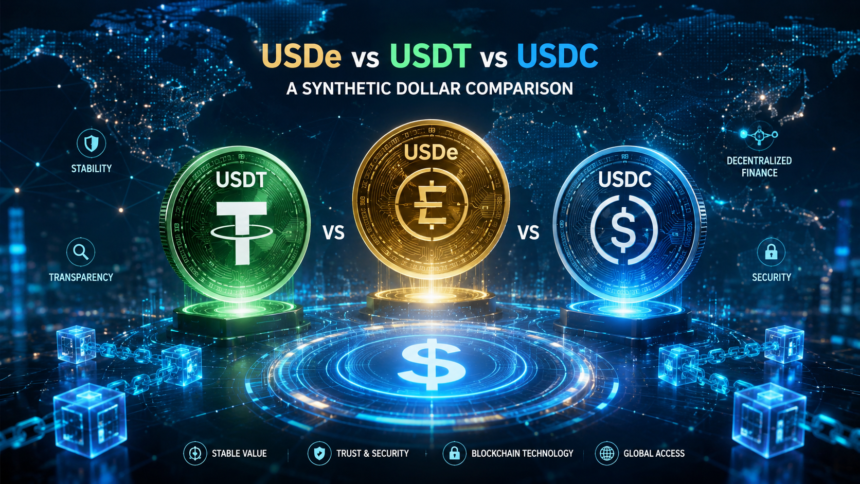
The stablecoin market has become one of the most important parts of the cryptocurrency industry. Traders, investors, institutions, and decentralized finance users rely on stablecoins every day to move funds, protect value, and access financial opportunities. As the crypto market continues to grow, different types of stablecoins have emerged to meet different needs.
- Understanding Stablecoins
- What Is USDT?
- What Is USDC?
- The Core Difference Between USDe, USDT, and USDC
- How USDe Maintains Stability
- How USDT Maintains Stability
- How USDC Maintains Stability
- Advantages of USDe
- Advantages of USDT
- Regulatory Environment and Compliance Considerations
- Key Factors to Consider Before Choosing a Stablecoin
- The Role of Stablecoins in Cross-Border Payments
- How Stablecoins Support Crypto Market Growth
- Advantages of USDC
- Risks Associated with USDe
- Risks Associated with USDT
- Risks Associated with USDC
- USDe in Decentralized Finance
- USDT in Trading Markets
- USDC in Institutional Finance
- Future Outlook for Stablecoins
- Which Stablecoin Is Best?
- Frequently Asked Questions
- Conclusion
Among the most discussed options today are USDe, USDT, and USDC. Each stablecoin follows a unique model to maintain its value near one US dollar. While USDT and USDC use traditional reserve-backed approaches, USDe introduces a synthetic dollar model that works differently from conventional stablecoins.
Understanding these differences is essential for anyone who wants to make informed decisions in the crypto market. This guide explores USDe vs USDT vs USDC: A Synthetic Dollar Comparison in detail. We will examine how each stablecoin works, their advantages, risks, use cases, and future potential.By the end of this guide, you will have a clear understanding of which stablecoin may be most suitable for your investment strategy, trading activity, or DeFi participation.
Understanding Stablecoins
Stablecoins are digital assets designed to maintain a stable value. Most stablecoins aim to remain equal to one US dollar. They provide stability in a market known for price volatility.Cryptocurrency traders often use stablecoins to protect profits during market fluctuations. Businesses use them for payments and settlements. DeFi users rely on them for lending, borrowing, staking, and liquidity provision.
The popularity of stablecoins has increased significantly because they combine blockchain efficiency with the price stability of traditional currencies.However, not all stablecoins operate in the same way. Some use cash reserves, while others use synthetic mechanisms and derivatives. This difference creates unique benefits and risks.
What Is USDe?
USDe is a synthetic dollar created by Ethena. Unlike traditional stablecoins, USDe does not rely solely on cash reserves stored in banks.Instead, USDe uses a delta-neutral hedging strategy. Ethena holds crypto assets while simultaneously opening short positions in derivatives markets. This approach aims to maintain price stability without requiring full fiat backing.The synthetic design allows USDe to generate yield opportunities that traditional stablecoins often cannot provide. Many investors view USDe as an innovative development within decentralized finance.The goal of USDe is to create a scalable digital dollar that operates independently from traditional banking systems while maintaining stability.
What Is USDT?
USDT, also known as Tether, is the largest stablecoin by market capitalization. It has been a major part of the cryptocurrency ecosystem for many years.USDT maintains its value by holding reserves that include cash, cash equivalents, treasury bills, and other financial assets. The company behind Tether manages these reserves to support the stablecoin’s peg to the US dollar.Because of its widespread adoption, USDT is available on numerous exchanges and blockchain networks. It often serves as the primary trading pair for many cryptocurrencies.Its liquidity and accessibility have helped make USDT one of the most used digital assets globally.
What Is USDC?
USDC is another leading stablecoin that focuses heavily on transparency and regulatory compliance.Created by Circle, USDC is backed by reserves consisting primarily of cash and short-term US Treasury securities. The company regularly publishes reserve reports to provide transparency regarding its backing.Many institutions prefer USDC because of its compliance-focused approach and strong reputation within regulated financial environments.USDC has become a key component of decentralized finance, payments, and institutional crypto adoption.
The Core Difference Between USDe, USDT, and USDC
The main difference lies in how each stablecoin maintains its value.
- USDT relies on reserve-backed assets managed by Tether.
- USDC relies on highly transparent reserve-backed assets managed by Circle.
- USDe relies on synthetic financial mechanisms and hedging strategies rather than traditional reserve structures.
This distinction significantly affects risk, scalability, yield generation, and decentralization.When discussing USDe vs USDT vs USDC: A Synthetic Dollar Comparison, understanding these foundational differences is essential because they shape every aspect of each stablecoin’s performance.
How USDe Maintains Stability
USDe uses a unique approach called delta-neutral hedging.The system holds cryptocurrency assets while opening corresponding short positions in derivatives markets. If the value of the crypto collateral changes, the short position helps offset the price movement.This mechanism aims to maintain a stable dollar value without requiring direct fiat reserves.
The synthetic structure allows USDe to operate more independently from traditional banking systems. However, it also introduces risks associated with derivatives markets and funding rates.The effectiveness of this strategy depends on market conditions and proper risk management.
How USDT Maintains Stability
USDT maintains stability through reserve backing.Tether holds various financial assets that support the value of issued tokens. When users redeem USDT, the reserves help maintain confidence in the peg.
The large scale of USDT contributes to its liquidity. Millions of users trust it for trading and transferring funds across exchanges.Despite occasional concerns about reserve transparency, USDT has maintained its dominant market position for years.Its extensive adoption creates strong network effects that continue to support its popularity.
How USDC Maintains Stability
USDC follows a straightforward reserve-backed model.Every issued token is supported by corresponding reserve assets held by regulated financial institutions. Circle emphasizes transparency and publishes regular reports regarding reserve holdings.This approach appeals to institutions, businesses, and investors seeking a highly regulated stablecoin option.USDC’s commitment to compliance has strengthened its reputation among users who prioritize transparency and security.
Advantages of USDe
- USDe offers several benefits that distinguish it from traditional stablecoins.
- Potential yield generation through funding mechanisms.
- Reduced dependence on traditional banking infrastructure.
- Greater alignment with decentralized finance principles.
- Innovative synthetic dollar design.
- Scalability opportunities within crypto-native ecosystems.
These advantages have attracted significant attention from DeFi participants and crypto investors seeking alternatives to traditional stablecoins.
Advantages of USDT
USDT remains popular because of its extensive adoption.Its greatest strength is liquidity. Traders can easily move large amounts of capital without significant slippage.USDT also enjoys broad exchange support. Almost every major cryptocurrency exchange offers USDT trading pairs.Its long operating history has helped establish trust among many crypto users worldwide.
Regulatory Environment and Compliance Considerations
How Regulations Impact Stablecoins
Regulations play a major role in the stablecoin industry. Governments and financial authorities worldwide are working to create rules that improve transparency, security, and consumer protection. Stablecoin issuers must adapt to these changing requirements to maintain trust and continue operating in different markets. Strong regulatory frameworks can also encourage broader adoption among businesses and institutions.
Compliance Requirements for Stablecoin Issuers
Stablecoin providers often need to follow strict compliance standards. These standards may include reserve audits, anti-money laundering procedures, customer verification processes, and regular reporting. Companies that meet these requirements can build stronger credibility among users and regulators. Compliance also helps reduce risks related to fraud and financial misconduct.
Future Regulatory Trends
The regulatory landscape for stablecoins continues to evolve. Many experts expect clearer guidelines in the coming years, which could create more certainty for investors and businesses. As regulations become more defined, stablecoins may see greater mainstream adoption. Projects that prioritize transparency and compliance will likely benefit from these developments and attract a larger user base.
Key Factors to Consider Before Choosing a Stablecoin
When comparing stablecoins, users should evaluate several important factors:
- Stability and ability to maintain the dollar peg.
- Transparency of reserve holdings and reporting practices.
- Market liquidity and trading volume.
- Security measures and risk management systems.
- Regulatory compliance and legal standing.
- Integration with exchanges and DeFi platforms.
- Long-term sustainability and growth potential.
- Community trust and overall market reputation.
The Role of Stablecoins in Cross-Border Payments
Stablecoins have transformed international transactions by making payments faster and more cost-effective. Traditional cross-border transfers often involve multiple intermediaries, high fees, and lengthy processing times. Stablecoins help remove many of these barriers by enabling direct transfers on blockchain networks. Users can send funds across borders within minutes instead of waiting several business days. This efficiency has made stablecoins increasingly attractive for businesses, freelancers, and individuals who regularly handle international payments. As blockchain adoption grows, stablecoins are expected to play an even larger role in global financial transactions.
How Stablecoins Support Crypto Market Growth
Stablecoins serve as a foundation for many activities within the cryptocurrency ecosystem. They provide a stable store of value that allows investors to move funds without converting back to traditional currencies. This convenience helps improve market efficiency and liquidity. Stablecoins also support lending platforms, decentralized exchanges, staking protocols, and yield-generating opportunities. Their widespread use encourages innovation and helps attract new participants to the crypto industry. As digital asset adoption continues to expand, stablecoins will remain an essential component of the broader blockchain economy.
Advantages of USDC
USDC offers several important strengths.Transparency remains one of its most valuable features. Regular reserve disclosures provide confidence regarding asset backing.USDC also benefits from strong regulatory relationships and institutional acceptance.Many businesses and financial organizations view USDC as a reliable stablecoin for payments and settlements.Its focus on compliance supports long-term adoption in regulated markets.
Risks Associated with USDe
Although innovative, USDe carries unique risks.Its synthetic design depends on successful hedging strategies. Market disruptions could affect the effectiveness of these mechanisms.Derivatives markets introduce counterparty and operational risks.Funding rate fluctuations may also impact yield generation and system stability.As a newer stablecoin, USDe has less historical performance data compared to USDT and USDC.Investors should carefully evaluate these factors before allocating significant capital.
Risks Associated with USDT
USDT faces concerns related to reserve transparency and regulatory scrutiny.Although Tether has improved reporting practices over time, some market participants continue to seek additional transparency.Regulatory developments could influence stablecoin operations globally.Despite these concerns, USDT has demonstrated resilience through multiple market cycles.
Risks Associated with USDC
USDC’s primary risks often relate to regulatory environments and banking exposure.Because reserve assets are held within traditional financial systems, banking disruptions could potentially affect operations.Regulatory changes may also impact stablecoin issuance and compliance requirements.However, many users view these risks as manageable due to Circle’s transparent approach.
USDe in Decentralized Finance
USDe has gained significant traction within decentralized finance ecosystems.Its yield-generating capabilities attract users seeking passive income opportunities.Many DeFi protocols integrate USDe for staking, liquidity provision, and lending activities.Because it operates through crypto-native mechanisms, USDe aligns closely with decentralized financial infrastructure.This compatibility may support future growth as DeFi adoption expands.
USDT in Trading Markets
USDT dominates cryptocurrency trading activity.Many traders prefer USDT because of its unmatched liquidity and widespread exchange support.Large trading volumes make USDT particularly useful for active traders who require fast execution and deep markets.Its role as a trading currency remains one of its strongest advantages.
USDC in Institutional Finance
USDC continues to strengthen its position within institutional finance.Financial organizations appreciate its transparent reserves and regulatory focus.Payment providers, fintech companies, and enterprise users frequently choose USDC for settlements and cross-border transactions.As institutional adoption of digital assets grows, USDC may continue expanding its market presence.
Future Outlook for Stablecoins
The stablecoin industry continues evolving rapidly.Regulatory frameworks are becoming more defined, and institutional adoption is increasing.Synthetic dollars such as USDe introduce innovative approaches that could reshape how digital dollars function.Meanwhile, established options like USDT and USDC continue strengthening their ecosystems and infrastructure.The future may include coexistence among multiple stablecoin models, each serving different market segments.When evaluating USDe vs USDT vs USDC: A Synthetic Dollar Comparison, investors should consider their objectives, risk tolerance, and preferred ecosystem.
Which Stablecoin Is Best?
There is no universal answer because each stablecoin serves different purposes.
- Users focused on liquidity and trading often prefer USDT.</p>
- Users prioritizing transparency and regulatory compliance may choose USDC.</p>
- Interested in decentralized finance and synthetic dollar innovation may find USDe attractive.</p>
- The best choice depends on individual goals and risk preferences.
Understanding the strengths and limitations of each option helps users make informed decisions.
Frequently Asked Questions
What is the main difference between USDe, USDT, and USDC?
USDe uses a synthetic dollar model based on hedging strategies, while USDT and USDC rely on reserve-backed assets to maintain stability.
Is USDe safer than USDT and USDC?
USDe introduces different risks because it depends on derivatives and hedging mechanisms. Safety depends on market conditions and individual risk tolerance.
Why is USDT so popular?
USDT offers exceptional liquidity, widespread exchange support, and strong adoption across global cryptocurrency markets.
Why do institutions prefer USDC?
Institutions often prefer USDC because of its transparency, reserve reporting, and regulatory-focused approach.
Can USDe generate yield?
Yes. USDe can generate yield through funding mechanisms associated with its synthetic dollar structure.
Which stablecoin is best for trading?
Many traders prefer USDT because of its high liquidity and broad availability across exchanges.
Conclusion
The debate surrounding USDe vs USDT vs USDC: A Synthetic Dollar Comparison reflects the growing diversity of the stablecoin market. Each stablecoin represents a different vision for digital dollars.USDT leads in liquidity and market adoption. USDC stands out for transparency and institutional trust. USDe introduces an innovative synthetic model that expands the possibilities of decentralized finance.
As the cryptocurrency ecosystem matures, these stablecoins will likely continue playing critical roles in trading, payments, investing, and DeFi participation.Anyone exploring stablecoins should carefully assess security, transparency, liquidity, regulatory considerations, and long-term sustainability before making decisions.
Ultimately, understanding USDe vs USDT vs USDC: A Synthetic Dollar Comparison provides valuable insights into the future of digital finance and helps investors navigate the evolving crypto landscape with confidence.